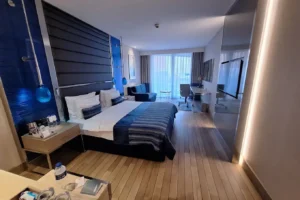
Acrylic Kitchen Cabinet Turkey
Acrylic Kitchen Cabinet Turkey: The Ultimate Technical, Design, and Sourcing Guide
The international kitchen design and manufacturing sector has undergone a massive industrial evolution over the last several years. At the forefront of this structural shift is Turkey, a nation that has rapidly transformed into a global manufacturing powerhouse by blending precision German engineering, sleek Italian design aesthetics, and highly competitive economic frameworks. Within the premium cabinetry landscape, the demand for an acrylic kitchen cabinet from Turkey has reached unprecedented heights. Global real estate developers, commercial procurement officers, and high-end interior designers increasingly specify Turkish acrylic cabinetry due to its flawless surface tension, mirror-like reflectivity, extreme scratch resistance, and exceptional longevity.
This technical guide offers a comprehensive, deep-dive analysis of the acrylic kitchen cabinet industry in Turkey. We will explore everything from raw material engineering and polymer chemistry to high-tech co-extrusion processes, automated manufacturing setups, architectural styling options, cost optimization strategies, and complex international supply chain logistics.
1. The Anatomy and Material Science of Premium Turkish Acrylic Panels
To truly understand why an acrylic kitchen cabinet from Turkey represents a premier choice for modern, high-traffic residential and commercial kitchens, one must examine the specific engineering layers that form these high-gloss and deep-matte surfaces. Acrylic cabinetry is not painted or lacquered; rather, it relies on a sophisticated composite material matrix.
Substrate Selection: Calibrated MDF and HDF Core Materials
The internal foundation of any premium Turkish acrylic door panel determines its structural stability over decades of daily use. High-tier Turkish manufacturers strictly avoid low-density particle boards, which are prone to warping and telegraphing structural imperfections through the face sheet. Instead, they utilize highly calibrated Medium-Density Fiberboard (MDF) or High-Density Fiberboard (HDF).
- Density Specifications: The core MDF typically features an optimized density profile ranging from \(780 \text{ kg/m}^3\) to \(880 \text{ kg/m}^3\). This ultra-dense consolidation of wood fibers provides a flat surface, which is absolutely essential for avoiding optical distortion on the final acrylic face.
- Moisture-Resistant (MR) Engineering: Because kitchens are exposed to localized humidity, steam, and water spills, top-tier Turkish exporters rely on green-core MR MDF. This substrate incorporates specialized water-repellent resins during fiber pressing, ensuring the panel exhibits less than \(6\%\) thickness swelling when exposed to high-humidity environments over extended periods.
The Polymer Matrix: PMMA vs. Cheap Substitutes
The visible face of an acrylic kitchen cabinet from Turkey consists of a premium thermoplastic layer made from Polymethyl Methacrylate (PMMA), often co-extruded with Acrylonitrile Butadiene Styrene (ABS) for enhanced impact strength.
- Optical Purity of PMMA: Pure PMMA possesses incredible optical clarity, allowing light to pass through without distortion. This gives high-gloss acrylic panels their characteristic glass-like depth. Unlike cheaper PVC (Polyvinyl Chloride) or PET (Polyethylene Terephthalate) foils, high-quality acrylic does not exhibit an “orange peel” texture or wave patterns when viewed under direct light.
- The Co-Extrusion Layering: Premium Turkish acrylic panels feature a multi-layer composition. A typical sheet consists of a \(0.2 \text{ mm}\) to \(1.0 \text{ mm}\) top layer of pure PMMA fused seamlessly to a thicker base layer of color-matched structural ABS. This combination provides excellent surface hardness from the PMMA, alongside the high impact resistance and structural flexibility of ABS.
+-------------------------------------------------------+

|             Top Protective Layer: Pure PMMA           |  <- Glass-Like Optical Depth (0.2 - 1.0 mm)
+-------------------------------------------------------+

|             Structural Base Layer: Color-Matched ABS  |  <- High Impact Resistance & Flex
+-------------------------------------------------------+

|             PUR Hot-Melt Adhesive Layer               |  <- Waterproof Polyurethane Bonding Matrix
+-------------------------------------------------------+

|             Calibrated MDF Core (780 - 880 kg/m³)     |  <- Moisture-Resistant Engineered Fiber Core
+-------------------------------------------------------+

|             Matching Structural Acrylic Backing Sheet |  <- Prevents Asymmetrical Panel Warping
+-------------------------------------------------------+
The Tension Balance: The Balancing Backing Sheet
A common flaw in lower-grade manufacturing is applying a premium acrylic layer to the front of an MDF board while using a cheap melamine paper on the back. Because different materials expand and contract at different rates when exposed to heat and humidity, this asymmetry causes the panel to bow or warp over time.
To prevent this, a high-quality acrylic kitchen cabinet from Turkey uses an identical or carefully color-matched structural backing sheet of ABS/PMMA on the reverse side. This creates a perfectly balanced tension profile across the core, ensuring the door panel remains completely flat over its entire operational lifespan.
2. Advanced PUR Hot-Melt Lamination and Production Technologies
The exceptional durability and visual perfection of an acrylic kitchen cabinet from Turkey are achieved through massive capital investments in automated lamination machinery, primarily sourced from industry-leading German and Italian equipment manufacturers.
The PUR (Polyurethane) Hot-Melt Revolution
The method used to bond the acrylic sheet to the MDF core is a critical factor in cabinet manufacturing. Older lamination systems relied on standard EVA (Ethylene Vinyl Acetate) adhesives or water-based glues. However, these older methods are prone to melting under kitchen heat or delaminating when exposed to moisture around dishwashers and sinks.
Turkish mega-factories have almost universally adopted PUR (Polyurethane) hot-melt adhesive technology.
- The Chemical Cross-Linking Process: PUR adhesive is applied at high temperatures (typically between \(130^{\circ }\text{C}\) and \(150^{\circ }\text{C}\)). As it cools, it undergoes an irreversible chemical moisture-curing process, cross-linking with both the wood fibers of the MDF and the polymers of the acrylic sheet.
- Unparalleled Heat and Water Resistance: Once fully cured, the PUR bond can withstand temperatures ranging from \(-40^{\circ }\text{C}\) up to \(150^{\circ }\text{C}\). It forms a waterproof barrier that prevents steam or liquid water from penetrating the adhesive line, completely eliminating the risk of edge delamination.
The Automated Flat-Line Lamination Sequence
Inside the automated cleanrooms of Turkish industrial zones, the production of acrylic panels follows a strict technical sequence:
- Micro-Duster Cleaning: The calibrated MDF boards pass through an industrial brush-cleaning and de-ionizing system that uses high-velocity compressed air to remove every single microscopic dust particle from the board’s surface.
- Precision Roller Coating: The PUR hot-melt adhesive is applied via a computerized roller coater, ensuring a uniform coat across the board, down to a tolerance of a few grams per square meter.
- Acrylic Sheet Positioning: Robotic arms or automated feed rollers position the PMMA/ABS sheets onto both sides of the glued MDF board simultaneously.
- Multi-Stage Calender Pressing: The panel passes through a series of heavy, heated chrome rollers (calenders) that apply tons of continuous, uniform pressure. This forces out any trapped air bubbles, creating a perfectly smooth, flat surface.
- Cooling and Protection: The laminated panels are moved to a cooling conveyor system where the PUR glue begins its initial cure. A heavy-duty, UV-resistant PE protective film is applied to the acrylic surface to safeguard it during subsequent machining steps.
3. Cutting, Drills, and Edge-Banding Precision
A premium kitchen door is defined by its edges. Even the most pristine acrylic surface will look poorly made if its edge seams are thick, dark, or uneven. Turkish manufacturers excel at executing pristine edges through advanced machinery and highly skilled technicians.
Zero-Joint Laser and Hot-Air Edge-Banding Technologies
The traditional method of applying edge-banding uses standard glue-pot edge-banders, which leave a visible glue line that can trap dirt and moisture over time. To achieve a modern, seamless look, top-tier manufacturers of the acrylic kitchen cabinet from Turkey deploy advanced Zero-Joint technologies, such as Laser Edge-Banding or Hot-Air Co-Extrusion Systems (e.g., Homag airTec or Biesse AirForce).
[ Laser / Hot-Air Source ] ---> Fuses Functional Layer on Edge-Band
                                 |
                                 V
+-----------------------+ +--------------+

|                       | |  Co-Extruded |
|  MDF Core             | |  Acrylic     |
|  with Acrylic Face    | |  Edge-Band   |
|                       | |              |
+-----------------------+ +--------------+
                          (Zero-Glue Line Seamless Fusion)
- The Functional Polymer Layer: Instead of using separate glue, the acrylic edge-band features a special co-extruded functional layer on its reverse side that matches the color of the band perfectly.
- Thermal Fusion: A laser or high-velocity hot air stream melts this functional layer instantly at the point of application. The edge-band is then pressed firmly onto the machined edge of the panel.
- The Result: The acrylic face and the edge-band fuse into a single, continuous piece. This creates a zero-joint finish with no visible glue line, offering superior aesthetics and total resistance to water and steam.
CNC Machining and Drilling Tolerances
After lamination, the panels are cut and drilled on high-performance CNC nesting centers. Automated optimization software calculates the most efficient cutting layouts to minimize material waste.
Hinge holes, drawer runner mounting points, and custom hardware cutouts are drilled with extreme precision, maintaining tolerances within \(\pm 0.05\text{ mm}\). This digital accuracy ensures that when the acrylic kitchen cabinet from Turkey arrives at the international job site, all door panels align perfectly with consistent, uniform gaps.
4. Visual Typologies: High-Gloss Mirror vs. Anti-Fingerprint Deep-Matte
The acrylic manufacturing industry in Turkey caters to a wide variety of global design styles. Acrylic sheets can be engineered to achieve two distinct visual styles: ultra-high-gloss and deep-matte.
Ultra-High-Gloss Acrylic (The Mirror Effect)
High-gloss acrylic remains a popular choice for modern urban apartments, luxury high-rises, and contemporary residential spaces. A premium high-gloss acrylic kitchen cabinet from Turkey reflects light with remarkable clarity, creating a sense of openness that can make compact kitchens feel significantly larger.
- Gloss Unit Metrics: Premium Turkish high-gloss panels achieve a reflective rating exceeding 90 Gloss Units (GU) when measured at a \(60^{\circ }\) angle. This matches the reflective properties of back-painted glass, while being significantly lighter and more impact-resistant.
- Color Depth and Vibrancy: Because the PMMA layer is completely transparent, embedded solid colors, metallic flakes, and wood-grain prints gain an enhanced sense of depth and vibrancy that standard laminates cannot match.
Deep-Matte Acrylic (The Anti-Fingerprint Revolution)
As global interior design trends move toward understated luxury, matte surfaces have grown significantly in popularity. Turkish factories have met this demand by producing advanced deep-matte acrylic panels.
- The Zero-Reflectivity Finish: These panels feature a gloss rating of less than 3 GU, absorbing incoming light to create a velvety, non-reflective surface.
- Excellence in Anti-Fingerprint Performance: Premium matte acrylic panels undergo an electron-beam curing (EBC) process or receive specialized oleophobic coatings. This structure disperses skin oils instantly, preventing fingerprints, smudge marks, and water spots from showing on the cabinet doors. This directly addresses the main historical drawback of choosing dark kitchen cabinetry.
5. Engineering Durability Standards, Testing, and Performance Certification
A kitchen is a demanding environment that experiences daily physical impacts, moisture exposure, household chemicals, and shifting ambient temperatures. Turkish manufacturers exporting to North America, the UK, and the European Union ensure their products comply with strict international testing frameworks.
Rigorous Performance Standards
| Performance Characteristic | International Standard | Turkish Manufacturer Compliance Profile |
|---|---|---|
| Surface Scratch Resistance | EN 438-2 / ISO 1518 | High-scratch acrylic varieties withstand forces up to 6N without deep surface penetration. |
| Colorfastness & UV Resistance | ISO 4892-2 (Xenon-Arc) | Grade 4-5 gray scale rating; zero visible yellowing or color fading after 10 years of indoor UV exposure. |
| Chemical & Stain Resistance | EN 12720 / DIN 68861-1 | No surface degradation from continuous 16-hour exposure to olive oil, red wine, coffee, or acetone. |
| Impact & Structural Stability | ISO 6272 (Drop Test) | Resists cracking or delamination from a 500g steel ball impact. |
| Formaldehyde Gas Emissions | EN 717-1 | Compliant with E1 and ultra-clean E0 / CARB Phase 2 standards. |
Hard-Coat Self-Healing Polymeric Membranes
The top layer of premium Turkish acrylic panels often includes a specialized hard-coat layer. This layer gives the panel a surface hardness comparable to soft glass (typically reaching a 4H to 6H pencil hardness rating).
Additionally, certain high-tech matte and gloss variants have micro-scratch recovery properties. If the surface develops faint hairline scratches from everyday cleaning, applying mild heat—such as wiping the panel with a warm, damp microfiber cloth—softens the polymer matrix slightly, allowing the micro-scratches to smooth out and disappear.
6. Functional Architecture: Hardware Integration and Structural Systems
An acrylic kitchen cabinet from Turkey is engineered as a cohesive architectural system where the exterior panels and the interior mechanics work together seamlessly.
Integrating Premium Global and Domestic Hardware
To complement the high-quality exterior panels, Turkish cabinet exporters partner with top-tier international and domestic hardware brands:
- Blum (Austria) & Grass (Germany): Turkish export kitchens regularly come configured with Blum Clip Top Blumotion hinges and Legrabox drawer box profiles. These hardware systems feature fluid-dampened soft-closing mechanisms and a dynamic load capacity ranging from \(40\text{ kg}\) to \(70\text{ kg}\) per drawer unit.
- Samet (Turkey): As a major domestic manufacturing brand, Samet produces world-class, award-winning lift-up flap systems, multi-dimensional hinge mechanisms, and slim-walled drawer systems (such as the Alpha Box and Flow series) that provide exceptional durability at a highly competitive price point.
Seamless Handleless Architecture
The clean design of acrylic panels makes them ideal for handleless contemporary kitchen styles:
- Integrated J-Shape Profiles: Certain specialized Turkish manufacturers can mill a comfortable finger-pull J-groove directly into the top edge of the panel core before applying a flexible, post-formed acrylic sheet over the curve.
- True Gola Profile Aluminum Channels: The cabinet carcass is constructed with horizontal or vertical recessed aluminum Gola profiles. This allows users to open doors easily by pulling them from behind the flat acrylic panel, maintaining a clean look across the entire kitchen.
   [ Quartz Countertop ]
   ---------------------
   [ Recessed Aluminum Gola Channel ] <--- User pulls door from behind
   +-------------------+

   |                   |
   | Premium Acrylic   |
   | Cabinet Door      |
   |                   |
   +-------------------+
Carcass Engineering and Internal Shell Construction
While the exterior doors use premium acrylic sheets, the internal cabinet box (carcass) requires a rugged, easy-to-clean structure. Turkish factories build these internal units using \(18\text{ mm}\) thick melamine-faced moisture-resistant particle board or MDF. All exposed carcass edges are edge-banded with \(1\text{ mm}\) thick impact-resistant ABS strips using waterproof PUR adhesives to protect the cabinet from moisture and wear.
7. Major Turkish Sourcing Hubs and Manufacturing Clusters
Turkey’s furniture and cabinetry industry is organized into massive, highly specialized Organized Industrial Zones (OSB – Organize Sanayi Bölgesi). For international buyers planning an efficient sourcing trip, targeting the correct geographic hub is critical.
1. Inegöl (Bursa): The Global Woodworking Capital
- Industrial Landscape: Inegöl stands as one of the largest furniture clusters in Europe, housing an end-to-end industrial ecosystem of raw log processors, advanced MDF production plants, polymer extruders, and large-scale cabinetry factories.
- Best Suited For: Container-load volumes, mid-to-high tier multi-residential developments, and wholesale sourcing. Inegöl factories excel at handling bulk exports efficiently while maintaining reliable production schedules.
2. Kayseri: The Large-Scale Automation Hub
- Industrial Landscape: Kayseri is home to massive, highly automated industrial production plants. These factories use computerized, high-speed flat-line lamination setups and automated packaging systems.
- Best Suited For: Massive commercial construction projects, government housing developments, and global retail chains that require thousands of standardized linear meters of cabinetry with absolute dimensional consistency.
3. Istanbul (Modoko, Masko, and Tuzla OSB): Design Innovation
- Industrial Landscape: Istanbul combines high-end design showrooms with advanced production facilities in the Tuzla and Ikitelli industrial zones. It is the center for design innovation, custom detailing, and architectural planning in Turkey.
- Best Suited For: Boutique real estate developments, high-end custom penthouses, and complex architectural projects that require close collaboration on design details and custom sizing.
4. Izmir & Manisa: The Aegean Export Gateway
- Industrial Landscape: Located right on the Aegean coast, these factories lean heavily toward Western European eco-design standards and premium aesthetic finishes.
- Best Suited For: Buyers prioritizing fast maritime logistics to Europe and the Americas, as well as projects with strict green building certifications.
8. Financial and Strategic Advantages: Turkey vs. Italy vs. China
For real estate developers, commercial procurement directors, and hotel construction managers, selecting a manufacturing partner is an important financial decision. An acrylic kitchen cabinet from Turkey offers a highly compelling value proposition when compared to products from other major global manufacturing hubs.
Turkey vs. Italy (The Luxury vs. Cost Balance)
- Quality Comparison: Premium Turkish factories use identical German CNC machinery and the exact same premium European PMMA polymer sheets as top-tier Italian brands. The level of physical craftsmanship, flatness, and edge quality is virtually indistinguishable.
- The Financial Advantage: Due to lower operating overhead, localized energy infrastructure, and highly optimized labor rates, a premium acrylic kitchen manufactured in Turkey is typically \(45\%\) to \(65\%\) more cost-effective than an identical setup made in Italy.
Turkey vs. China (The Logistics vs. Tariff Balance)
- Material Reliability: Some entry-level Chinese factories use thin PVC foils or low-grade PET films marketed as acrylic, which can lead to color fading and edge delamination over time. Turkish manufacturers use authentic, thick PMMA/ABS co-extrusions that meet strict European Union quality standards.
- Logistical Efficiency: For buyers across Europe, the Middle East, and the East Coast of North America, Turkey offers significantly shorter shipping times. This protects project timelines from the delays often associated with East Asian shipping routes.
- Tariff Protection: Cabinetry sourced from Turkey avoids the heavy anti-dumping duties and punitive trade tariffs that many Western nations place on Chinese wood and furniture products.
9. Supply Chain Logistics, Packaging Protocols, and Transit Management
Shipping a container of high-gloss or deep-matte acrylic kitchen cabinet from Turkey to international ports requires careful attention to packaging and logistics. Acrylic surfaces are sensitive to friction and pressure during ocean transport, making proper preparation essential.
Rigid Pre-Assembled vs. Knock-Down (Flat-Pack) Shipping
Turkish exporters customize their shipping methods based on the scale of the project and local on-site labor costs:
- Rigid (Pre-Assembled Cabinetry): Each cabinet box is completely assembled, square-checked, and fitted with its doors and hardware right at the factory. This guarantees flawless alignment, reduces on-site installation time, and minimizes mistakes by local tradespeople.
- Flat-Pack / Knock-Down (RTA): Panels are shipped disassembled in flat boxes. This method maximizes container volume, making it highly economical for long-distance transport to regions like Australia or the West Coast of North America.
The Protective Packaging Standard
To ensure every panel arrives in pristine condition, Turkish exporters implement a strict, multi-layer packaging protocol:
+-------------------------------------------------------------+

|  Heavy-Duty 5-Ply Corrugated Outer Carton Box               |
+-------------------------------------------------------------+

|  High-Density EPS Foam Corner & Edge Guards (Impact Buffer) |
+-------------------------------------------------------------+

|  Soft Polyethylene Foam Interleaving Layers (Anti-Friction) |
+-------------------------------------------------------------+

|  Co-Extruded PE Surface Protective Film (Factory Applied)   |
+-------------------------------------------------------------+
- The Primary Surface Protection: A factory-applied, co-extruded PE protective film shields the acrylic face from dust and scratches. This film stays on the panels during cutting, edge-banding, shipping, and installation, and is peeled off only when the kitchen is ready for handover to the client.
- The Friction Barrier: Panels are separated by soft polyethylene foam sheets to prevent micro-scratching caused by transit vibrations.
- The Impact Buffer: High-density expanded polystyrene (EPS) foam corner blocks and edge guards protect the package against accidental drops or shifting inside the shipping container.
- The Outer Shield: The entire package is sealed inside a heavy-duty, moisture-resistant 5-ply corrugated cardboard box, which is then securely strapped onto reinforced wooden pallets for safe forklift handling.
Shipping Times and Global Trade Corridors
Turkey’s central location provides excellent logistics advantages for international transport:
- To Western Europe: Overland freight trucks deliver from Istanbul or Bursa to distribution hubs in Germany, France, or the UK within 5 to 7 days. Intermodal shipping via Trieste (Italy) provides an efficient, low-carbon transport option.
- To the United States & Canada: Regular container ships depart weekly from major Turkish ports, including Ambarli (Istanbul), Gemlik (Bursa), and Izmir. Average ocean transit times range from 18 to 22 days to East Coast ports like New York, Savannah, and Miami.
- Streamlined Customs (The ATR Advantage): Thanks to the Customs Union agreement between Turkey and the European Union, goods travel smoothly with ATR certificates, eliminating import tariffs for European buyers and expediting customs clearance.
10. Environmental Responsibility and Sustainable Manufacturing Certifications
Modern real estate projects and commercial developments require strict compliance with green building standards, including LEED, BREEAM, and WELL certifications. The Turkish acrylic cabinetry industry has made substantial investments to align its practices with global environmental requirements.
Non-Toxic Polymer Chemistry and Indoor Air Quality
Pure PMMA/ABS acrylic is an inherently stable polymer that does not contain volatile organic compounds (VOCs) or harmful plasticizers like phthalates. Unlike lower-grade varnishes or solvent-based paint finishes, premium acrylic panels do not off-gas toxic chemicals into the home. Furthermore, the core MDF sheets used by top-tier Turkish exporters comply with strict CARB Phase 2 and European E0 standards, ensuring exceptionally low formaldehyde emissions for a healthier indoor environment.
Sustainable Forestry and Supply Chain Tracking
Leading manufacturers of the acrylic kitchen cabinet from Turkey maintain full Forest Stewardship Council (FSC) chain-of-custody certifications. This guarantees that all wood fibers used in the core MDF substrate come from responsibly managed forests and verified, legal timber sources.
Advanced Waste Recycling and Circular Production
Turkish industrial zones follow strict environmental protection regulations. Cleanrooms use advanced air-filtration systems to capture particulate matter, while automated factories collect acrylic and wood off-cuts for recycling. These scraps are processed to create secondary consumer goods or used in clean biomass facilities to generate thermal energy for the factory’s production lines, minimizing waste.
11. Professional Installation and Long-Term Maintenance Protocols
To ensure that a high-gloss or deep-matte acrylic kitchen cabinet from Turkey maintains its premium look and performance for decades, proper installation techniques and regular maintenance are essential.
Precision Installation: Laser-Guided Levelling
Because acrylic cabinetry features clean, geometric lines and reflective surfaces, even minor misalignments will be highly visible. Experienced installation teams utilize multi-line 3D laser levels to establish a true horizontal line across the space.
Any unevenness in the floor or walls is corrected using heavy-duty adjustable legs (such as those from Italian brand Camar), which are later concealed behind matching acrylic plinths fitted with soft rubber floor seals to keep out dust and moisture.
  Vertical Drywall Line
  |
  +------------------+

  |  Acrylic Cabinet | <--- Micro-leveled via adjustable legs
  +------------------+

  |  Adjustable Leg  | <--- Camar Heavy-Duty Leveling System
  +------------------+
  ==================== Finished Floor Level
The Micro-Scribing Technique
Rarely are room walls perfectly straight. When an acrylic cabinet line meets an uneven wall, installers use matching filler panels. These panels are carefully micro-scribed to follow the exact profile of the wall, creating a clean, seamless finish without exposing any of the cabinet box structures.
Long-Term Care and Cleaning Instructions
Maintaining the beautiful finish of a premium Turkish acrylic kitchen is simple and straightforward when following a few basic guidelines:
- Daily Wipe-Downs: Use a soft, lint-free microfiber cloth dampened with warm water and a drop of pH-neutral liquid dish soap. Avoid paper towels, coarse sponges, or old rags, which can contain abrasive fibers that leave faint swirl marks over time.
- Chemicals to Avoid: Never use cleaning agents that contain ammonia, acetone, thinners, bleach, or abrasive scouring powders. These harsh chemicals can break down the outer polymer structure, permanently dulling high-gloss surfaces or altering the texture of matte finishes.
- Moisture and Steam Management: While premium acrylic cabinetry is highly water-resistant due to PUR hot-melt bonding, it is best practice to avoid hanging wet kitchen towels directly over the cabinet doors. Additionally, run the range hood during cooking to prevent concentrated steam from settling on the upper cabinet edges.
12. Conclusion: The Strategic Value of Sourcing Turkish Acrylic Cabinetry
Choosing an acrylic kitchen cabinet from Turkey offers an exceptional combination of modern aesthetics, advanced material engineering, and smart financial value. By using high-density moisture-resistant MDF cores, premium PMMA/ABS co-extruded sheets, and state-of-the-art German and Italian machinery, Turkish manufacturers deliver cabinetry that meets or exceeds international luxury benchmarks at a highly optimized cost. Whether you are an international real estate developer coordinating a multi-unit apartment complex or an interior designer creating a custom residential kitchen, Turkey’s modern manufacturing hubs provide the scale, flexibility, and logistical efficiency to bring your high-end design concepts to life.
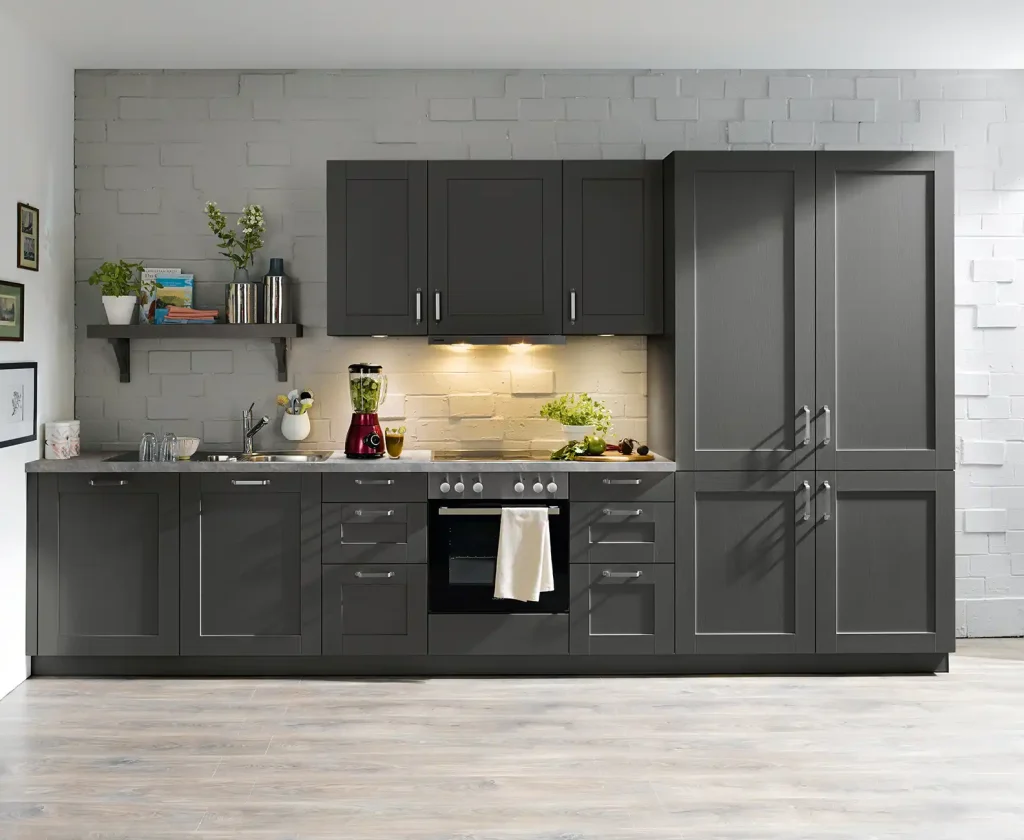
Etiket:Anthracite Kitchen Cabinet Turkey, Grey Kitchen Cabinet Turkey, Lacquered Door Production Turkey, Louvered Door Kitchen Bathroom Manufacturing Turkey, Louvered Door Solid Wood Kitchen Cabinets Turkey, Mass Production Kitchen Bathroom Cabinets Turkey, Moisture-Resistant Kitchen Cabinet Turkey, Silk Matte Kitchen Cabinet Turkey, Solid Wood Door Production Turkey, Solid Wood Door Turkey, Solid Wood Door Window Production Turkey, Water-Resistant Bathroom Cabinet Turkey, White Kitchen Cabinet Turkey, Wooden Door Production Turkey

Şunları da sevebilirsiniz
Pozantı Otel Mobilyaları | Adana Otel Mobilya Üretimi
Pozantı Otel Mobilyaları | Adana Otel Mobilya Üretimi