Lacquered Kitchen Cabinet Turkey
Lacquered Kitchen Cabinet Turkey: The Ultimate Technical, Design, and Sourcing Guide
The global kitchen manufacturing industry has witnessed a massive paradigm shift over the last decade. At the epicenter of this transformation is Turkey. Renowned for combining Italian design sensibilities with advanced German production machinery and highly competitive cost structures, Turkey has become a premier global hub for premium kitchen cabinetry. Among the various finishes available, lacquered kitchen cabinets from Turkey represent the absolute pinnacle of luxury, durability, and customized engineering.
This comprehensive guide delivers an in-depth, technical exploration of the lacquered kitchen cabinet industry in Turkey. We will dissect everything from raw material composition and multi-layer chemical coatings to manufacturing technologies, structural design paradigms, cost optimization strategies, and international sourcing logistics.
1. The Anatomy of a Premium Turkish Lacquered Kitchen Cabinet
To understand why a lacquered kitchen cabinet from Turkey commands respect in international markets, one must look beneath the surface. The quality of a lacquered cabinet is determined by its substrate material, chemical formulation, and application sequence.
Substrate Selection: MDF vs. Particle Board
A common mistake in low-tier manufacturing is applying lacquer directly onto low-density particle board. Premium Turkish manufacturers strictly utilize High-Density Fiberboard (HDF) or Premium Medium-Density Fiberboard (MDF) as the core substrate for lacquer application.
- Density Dynamics: The MDF utilized typically features a density profile ranging from \(750 \text{ kg/m}^3\) to \(850 \text{ kg/m}^3\). This dense fiber structure ensures that the board absorbs the primer coats uniformly without swelling or creating microscopic surface waves.
- Moisture Resistance (MR Quality): Given that kitchens are high-humidity zones, top-tier Turkish exporters use green-core MR (Moisture Resistant) MDF. This prevents core expansion and subsequent lacquer cracking around high-moisture zones like the sink base and dishwasher surroundings.
The Chemical Matrix of Lacquer Coatings
Lacquering is not mere painting; it is a chemical bonding process. Turkish factories utilize advanced polyurethane (PU), acrylic, and ultraviolet (UV) cured resin systems sourced from leading global chemical giants or premium domestic suppliers.
+-------------------------------------------------------+

|             Top Coat: Anti-Scratch Polyurethane        |  <- Polyurethane / Acrylic / UV Cured
+-------------------------------------------------------+

|             Base Coat: Color Formulation Layer        |  <- Pigment Core
+-------------------------------------------------------+

|             Isolator / Sealer Layer                   |  <- Prevents chemical absorption
+-------------------------------------------------------+

|             Premium MDF Substrate (750-850 kg/m³)     |  <- High-Density Fiber Core
+-------------------------------------------------------+
- Polyurethane (PU) Lacquer: This is the gold standard for custom Turkish cabinetry. PU lacquer creates a thermosetting polymer matrix when cured. It offers exceptional chemical resistance against kitchen staples like acetic acid (vinegar), citric juice, and hot oils.
- Acrylic Lacquer: Known for its unparalleled optical clarity, acrylic lacquer is preferred for pristine white and ultra-gloss configurations. It features supreme UV resistance, ensuring that light-colored cabinets do not yellow over years of exposure to direct sunlight.
- UV-Cured Lacquer: Utilized in high-volume, automated flat-line production facilities in industrial hubs like Bursa and Kayseri. These coatings cure instantly under high-intensity UV lamps, creating an extremely hard, scratch-resistant outer shell.
2. Technical Production Processes in Turkish Mega-Factories
The global reputation of a lacquered kitchen cabinet from Turkey is sustained by heavy capital investments in state-of-the-art European machinery. Turkish mega-factories seamlessly blend automated precision with artisanal sanding details.
Step 1: Precision Sizing and CNC Profiling
The manufacturing cycle begins with automated panel saws or Nesting CNC machines (frequently sourced from German brands like Homag or Italian giants like Biesse). The MDF sheets are cut with tolerances tighter than \(\pm 0.1\text{ mm}\). If the design requires integrated J-pull handles, recessed finger grooves, or intricate classic raised panels, the CNC routers carve these profiles directly into the core material before any coating is applied.
Step 2: Edge Profiling and Calibrated Sanding
A lacquer finish is only as good as its edges. Sharp \(90^{\circ }\) angles are the enemy of lacquer; surface tension causes the liquid coating to pull away from sharp edges, leaving a microscopically thin layer vulnerable to chipping. Turkish engineers apply a precise radius (typically \(1\text{ mm}\) to \(2\text{ mm}\)) to all exposed edges using automated edge-rounding sanders. The entire panel then passes through a multi-head wide-belt sanding machine to achieve a perfectly calibrated, uniform thickness.
Step 3: Isolation and Priming (The Foundation)
Uncoated MDF is highly porous. If lacquer is applied directly, the substrate acts like a sponge, absorbing the resins unevenly.
- The Isolator Coat: A specialized chemical sealer is sprayed to seal the pores of the MDF, particularly on the highly absorbent machined edges.
- The Primer Layers (Undercoats): Two to three separate layers of heavy-bodied white polyester or polyurethane primer are applied. Each layer must dry completely before undergoing intermediate sanding.
Step 4: Robotized Spraying vs. Cleanroom Artisanship
For high-volume export lines, Turkish factories deploy automated reciprocating spray robots or anthropomorphic robotic arms inside positive-pressure pressurized spray booths.
- Atmospheric Control: The air inside these booths undergoes multi-stage filtration to eliminate microscopic dust particles down to a PM2.5 standard. The temperature is strictly maintained at \(22^{\circ }\text{C}\) with relative humidity pinned at \(50\%\).
- Hand-Spraying for Bespoke Projects: For highly customized, non-standard elements or complex three-dimensional classical moldings, master spray technicians handle the application manually using High-Volume Low-Pressure (HVLP) spray guns to ensure flawless, wrap-around coverage.
Step 5: Curing and the Multi-Stage Sanding Regimen
Between every single coat of primer and color lacquer, the panels are sanded. For a high-gloss liquid finish, panels go through up to seven distinct sanding cycles using increasingly fine abrasives, starting from 400-grit and progressing all the way up to 2000-grit or 3000-grit micro-abrasive disks.
Step 6: The Mirror Polishing Process (For Ultra-Gloss Finishes)
If the client specifies a high-gloss lacquered kitchen cabinet from Turkey, the cured topcoat undergoes a rigorous mechanical polishing phase. Specialized industrial buffing machines apply compound waxes and lamb’s wool pads rotating at calibrated RPMs. This eliminates any trace of “orange peel” texture, yielding a perfectly flat surface with a gloss unit (GU) rating exceeding 90 GU at a \(60^{\circ }\) measurement angle.
3. Aesthetic Typologies: Matte, High-Gloss, and Textured Lacquer
Turkish kitchen design does not operate in a vacuum. It evolves in real-time alongside Milanese and Parisian design trends. The versatility of lacquer enables Turkish manufacturers to offer three primary aesthetic variations.
Ultra-Matte and Soft-Touch Lacquer
The modern luxury aesthetic heavily favors anti-reflective, deep-matte surfaces. Turkish factories achieve this by adding specialized microscopic silica or organic matting agents into the PU topcoat matrix.
- The Zero-Gloss Phenomenon: These finishes often land between 1 to 5 Gloss Units, absorbing light rather than reflecting it.
- Anti-Fingerprint Technology: Premium matte configurations incorporate oleophobic coatings, preventing skin oils from leaving visible marks. This solves the primary historical issue associated with dark matte cabinetry.
Mirror High-Gloss Lacquer
High-gloss finishes remain incredibly popular in metropolitan developments across the UK, Middle East, and North America. A premium high-gloss lacquered kitchen cabinet from Turkey acts as a visual amplifier, reflecting natural light to make compact urban kitchens feel vast and airy. The depth of clarity achieved via multi-stage polishing creates a liquid-glaze effect that cheaper PVC or PET laminate alternatives simply cannot replicate.
Textured, Fluted, and Metallic Lacquer Artistry
One of Turkey’s greatest competitive advantages is its willingness to execute complex, custom-milled textures.
- Fluted and Ribbed Panels: CNC machines carve vertical wave patterns or micro-grooves into the MDF before it is completely wrapped in multi-layered lacquer.
- Metallic and Pearlescent Formulations: By introducing aluminum flakes, mica particles, or pearlescent pigments directly into the lacquer suspension, Turkish manufacturers create striking finishes that shift color slightly depending on the angle of incoming light.
4. Durability Standards, Testing, and Quality Control
A kitchen cabinet must withstand a brutal operational environment characterized by slamming doors, spilling liquids, scraping pans, and fluctuating ambient temperatures. Turkish manufacturers exporting to the European Union and North America must pass rigorous international quality benchmarks.
Structural Performance Metrics
| Performance Test | International Standard | Turkish Manufacturer Compliance Level |
|---|---|---|
| Scratch Resistance | EN 438-2 | Withstands forces up to 4N without deep film penetration |
| Chemical Resistance | EN 12720 | No visible staining from coffee, red wine, or vinegar at 16-hour exposure |
| Adhesion Strength | ASTM D3359 (Cross-Cut) | 5B Rating (Zero peeling or delamination at grid intersections) |
| Formaldehyde Emissions | EN 717-1 | Strictly compliant with E1 and Ultra-Low E0 standards |
The Scratch-Recovery Matrix
Advanced Turkish acrylic-lacquer coatings exhibit micro-scratch recovery properties. Under mild thermal stress (such as wiping the cabinet surface with a warm, damp microfiber cloth), the polymer matrix undergoes a cross-linking relaxation, effectively smoothing out minor hairline scratches automatically.
5. Architectural Integration: Smart Storage, Profiles, and Hardware
A premium lacquered kitchen cabinet from Turkey is never just a painted box; it is an integrated architectural system. Turkish exporters partner with elite global and domestic hardware brands to ensure that the interior mechanics match the external beauty.
Seamless Hardware Integration: Blum, Grass, and Samet
The functionality of Turkish cabinetry depends heavily on European-standard engineering:
- Blum (Austria) & Grass (Germany): Turkish luxury lines come standard with Blum Legrabox or Grass Vionaro drawer runner systems. These feature dynamic load capacities ranging from \(40\text{ kg}\) to \(70\text{ kg}\) per drawer, accompanied by fluid-dampened soft-closing mechanisms.
- Samet (Turkey): As a domestic manufacturing powerhouse, Samet produces world-class, award-winning lift-up hinge systems and slim-wall drawer boxes that compete directly with German engineering, offering an exceptional price-to-performance ratio for mid-to-high tier projects.
Handleless Evolution: Gola Profiles and Integrated J-Pulls
Lacquer’s seamless nature makes it ideal for clean, handleless kitchen profiles:
- J-Pull Profiles: The handle is milled directly into the top or bottom edge of the MDF door panel before lacquering. This creates a uniform look without requiring external metal hardware.
- Aluminum Gola Systems: The cabinet carcass is constructed with recessed aluminum channels (horizontal for base cabinets, vertical for tall pantry units). This allows the user to easily reach behind the flat lacquer door panel to pull it open.
   [ Countertop ]
   --------------
   [ Gola Channel ] <--- Recessed Aluminum Profile
   +------------+

   |            |
   |  Lacquer   |
   |  Cabinet   |
   |   Door     |
   |            |
Internal Ergonomics and LED Illumination
Turkish manufacturers excel at incorporating concealed motion-activated LED strip lighting. Channels are routed directly into the cabinet carcases with integrated micro-switches, casting a warm glow (\(2700\text{K} – 3000\text{K}\)) that accentuates the flawless lacquer finish while lighting up internal dividers, spice racks, and pull-out larder units.
6. Sourcing Lacquered Kitchen Cabinets from Turkey: Industrial Hubs
Turkey’s manufacturing landscape is highly organized into massive Organized Industrial Zones (OSB – Organize Sanayi Bölgesi). When sourcing a lacquered kitchen cabinet from Turkey, understanding these regional manufacturing hubs is vital for finding the right supplier.
Istanbul & Modoko / Masko: The Design Epocenters
- Characteristics: Istanbul houses the creative minds, high-end showrooms, and architectural studios. Modoko and Masko are massive dedicated furniture cities within Istanbul.
- Best Suited For: Low-volume, ultra-luxury, highly bespoke residential developments and penthouses where rapid design iterations and avant-garde customization are required.
Inegöl (Bursa): The Industrial Capital of Turkish Furniture
- Characteristics: Inegöl is a colossal furniture cluster containing hundreds of factories backed by an end-to-end supply chain of raw wood components, chemical suppliers, and hardware distributors.
- Best Suited For: Mid-to-high tier container-load exports. Inegöl factories are highly optimized for medium-to-large multi-residential projects, offering a superb balance of rapid lead times and competitive pricing.
Kayseri: The Automated Mass-Production Powerhouse
- Characteristics: Home to some of the largest industrial production facilities in Europe. Production here relies heavily on automated flat-line UV lacquering machinery.
- Best Suited For: Large-scale commercial projects, massive housing developments, and global retail chains requiring thousands of standardized linear meters of cabinetry with absolute consistency.
Izmir & Ankara: Premium Institutional Sourcing
- Characteristics: Izmir factories leverage Aegean logistical routes and frequently cater to high-end European eco-standards. Ankara is renowned for its highly disciplined, large-scale custom woodworking mills.
7. Comparative Economic Analysis: Turkey vs. Italy vs. China
For real estate developers, procurement officers, and interior designers, selecting a manufacturing country is a strategic financial decision. Here is how a lacquered kitchen cabinet from Turkey stacks up against its main global competitors.
1. The Italian Comparison (The Luxury Benchmark)
- Quality: Italian cabinetry is historically world-class, but Turkish mega-factories now utilize the exact same German CNC machinery and identical Italian lacquer chemicals (such as Sayerlack or ICA coatings).
- Cost Factor: Due to lower labor costs, optimized industrial energy tariffs, and favorable currency dynamics in Turkey, a premium lacquer kitchen manufactured in Inegöl or Istanbul is generally \(40\%\) to \(60\%\) more cost-effective than an identical configuration produced in Italy.
- Lead Times: Turkish factories are known for high flexibility and fast turnaround times, often beating Italian production schedules by several weeks.
2. The Chinese Comparison (The Volume Benchmark)
- Quality & Regulations: Sourcing lacquer from China can carry risks regarding formaldehyde emissions and chemical stability, unless dealing with top-tier vendors. Furthermore, geopolitical tariffs frequently disrupt supply chains.
- Logistics: For European, Middle Eastern, and East Coast American buyers, Turkey offers significantly shorter shipping times and lower freight costs compared to East Asian shipping routes.
- Customization: Chinese factories prefer massive volumes of identical units. Turkish manufacturers are much more willing to accommodate custom structural modifications for medium-sized residential projects.
8. Procurement Logistics, Packaging, and Global Supply Chain Management
The finest lacquer finish can be ruined instantly by poor packaging or careless transit conditions. Shipping a lacquered kitchen cabinet from Turkey to international destinations requires meticulous care and rigorous logistical protocols.
Rigid vs. Flat-Pack (RTA) Shipping Configurations
Turkish factories provide two primary shipping formats depending on project scale and destination requirements:
- Rigid Assembly (Pre-Assembled Cabinets): The cabinets are completely put together, square-checked, and hardware-mounted in the factory. This guarantees flawless alignment. While it increases ocean freight volume, it drastically reduces on-site installation labor costs and errors.
- Flat-Pack / Ready-to-Assemble (RTA): Panels are shipped disassembled. This maximizes container volume utilization, making it highly economical for long-distance transit to markets like Australia or Western North America.
The Protective Packaging Protocol
Because lacquer surfaces are sensitive to friction and impact, Turkish exporters utilize a specialized multi-layer protective packaging standard:
+-----------------------------------------------------------+

|  Heavy-Duty 5-Ply Corrugated Outer Carton                 |
+-----------------------------------------------------------+

|  High-Density EPS Foam Corner Protectors (Shock Buffer)   |
+-----------------------------------------------------------+

|  Polyethylene Foam Wrap Layer (Prevents Lateral Abrasion) |
+-----------------------------------------------------------+

|  Peelable PE Protective Film (Applied Directly to Lacquer)|
+-----------------------------------------------------------+
- Direct Contact Layer: A thick, peelable PE protective film is applied to the high-gloss or matte lacquer surface immediately after final inspection. This film remains on the cabinet doors throughout transit, delivery, and installation, only to be removed by the final user.
- Abrasion Protection: The panel is wrapped in a soft polyethylene foam envelope to prevent micro-scratching from transit vibrations.
- Impact Cushioning: High-density EPS corner protectors are fitted to absorb structural shocks if the carton is dropped.
- Outer Shield: The entire assembly is sealed inside a heavy-duty, moisture-resistant 5-ply corrugated cardboard box, which is strapped and palletized for forklift safety.
Shipping Times and Customs Advancements
Turkey’s geographical position provides an incredible logistical edge:
- To Europe: Overland trucking routes connect Istanbul to Central Germany or France within 4 to 6 days. Intermodal maritime corridors via Trieste (Italy) or Sète (France) provide efficient rail-linked delivery.
- To the Americas: Direct container vessels depart weekly from the ports of Ambarli (Istanbul), Gemlik (Bursa), and Izmir, arriving at East Coast US ports (New York/Savannah) in approximately 18 to 22 days.
- Customs Simplification: As part of the EU-Turkey Customs Union, customs clearance for European buyers is streamlined via ATR certificates, eliminating import tariffs for the vast majority of industrial wood and furniture products.
9. Sustainable Manufacturing and Eco-Certifications
Modern architecture demands environmental responsibility. A high-quality lacquered kitchen cabinet from Turkey aligns perfectly with global green building standards, including LEED and BREEAM eligibility.
Zero-VOC and Water-Based Lacquer Solutions
The traditional solvent-based lacquers of the past have been largely replaced in premium Turkish factories by low-VOC (Volatile Organic Compounds) or 100% water-based lacquer formulations. These advancements drastically reduce toxic emissions during production and ensure that the installed kitchen does not off-gas harmful chemicals into the home.
Sustainable Forest Management (FSC Compliance)
Top-tier Turkish cabinet manufacturers source their raw MDF from sustainable, managed forests. They hold strict Forest Stewardship Council (FSC) certifications, ensuring that the timber used in the core substrate can be traced back to verified, legal, and environmentally responsible forestry operations.
Clean Air and Factory Waste Recycling
Turkish industrial zones enforce strict environmental regulations. Exhaust air from factory spray booths passes through multi-stage active carbon filtration systems to neutralize airborne chemical particles. Additionally, leftover raw MDF scraps are collected and processed internally to fuel biomass heating systems for the factory’s drying ovens, creating a circular energy loop.
10. Installation, On-Site Calibration, and Maintenance
A successful kitchen project relies heavily on proper installation and long-term care. Even the most expertly crafted lacquered kitchen cabinet from Turkey requires precise installation to look its best.
Structural Preparation: Laser-Guided Alignment
Because lacquer features clean, unforgiving linear geometry, the walls and floors of the installation space must be checked carefully. Experienced installers utilize 3D multi-line laser levels to establish a true horizontal datum across the room. Any variance in the subfloor is corrected using heavy-duty adjustable legs (typically sourced from Italian brands like Camar), which are later hidden behind matching lacquered plinths fitted with integrated rubber water-seals.
  Vertical Wall (Must be true 90°)
  |
  +---------+

  | Cabinet | <--- Micro-adjusted via leveling legs
  +---------+

  |===|====| <--- Camar Adjustable Legs
  ============ Floor Line
Scribing and Filler Panels
No home has perfectly straight walls. When a lacquer cabinet line meets a wall, installers use matching lacquered filler panels. These panels are carefully micro-scribed to follow the exact contours of the drywall, ensuring a completely seamless fit without exposing any underlying cabinet carcasses.
Long-Term Maintenance Protocols
To preserve the finish of a premium Turkish lacquered kitchen for decades, homeowners should follow a straightforward maintenance routine:
- Daily Cleaning: Wipe surfaces down using a clean, lint-free microfiber cloth dampened with lukewarm water and a drop of pH-neutral dish soap. Avoid harsh dish towels or paper towels, which can leave faint swirl marks over time.
- Chemical Hazards to Avoid: Never use cleaning products containing ammonia, bleach, acetone, or abrasive scouring powders. These chemicals can break down the polyurethane matrix, permanently dulling the gloss or altering the color tone.
- Moisture Management: While premium Turkish cabinetry utilizes moisture-resistant cores, it is best practice to avoid hanging damp dish towels directly over lacquer door panels. Additionally, ensure the exhaust hood is turned on when cooking to prevent concentrated steam from settling on upper cabinet edges.
11. Conclusion: The Strategic Value of Turkish Lacquered Cabinetry
Specifying or purchasing a lacquered kitchen cabinet from Turkey represents an ideal balance of refined aesthetics, advanced technical engineering, and smart economic sourcing. By leveraging high-density MDF substrates, premium multi-layered chemical coatings, and top-tier European machinery, Turkish manufacturers deliver products that match or exceed traditional luxury benchmarks at a highly optimized price point. Whether you are an international property developer managing a multi-unit high-rise project or an interior designer creating a bespoke residential kitchen, Turkey’s advanced manufacturing hubs offer the scalability, customization, and logistical efficiency to bring high-end kitchen visions to life.
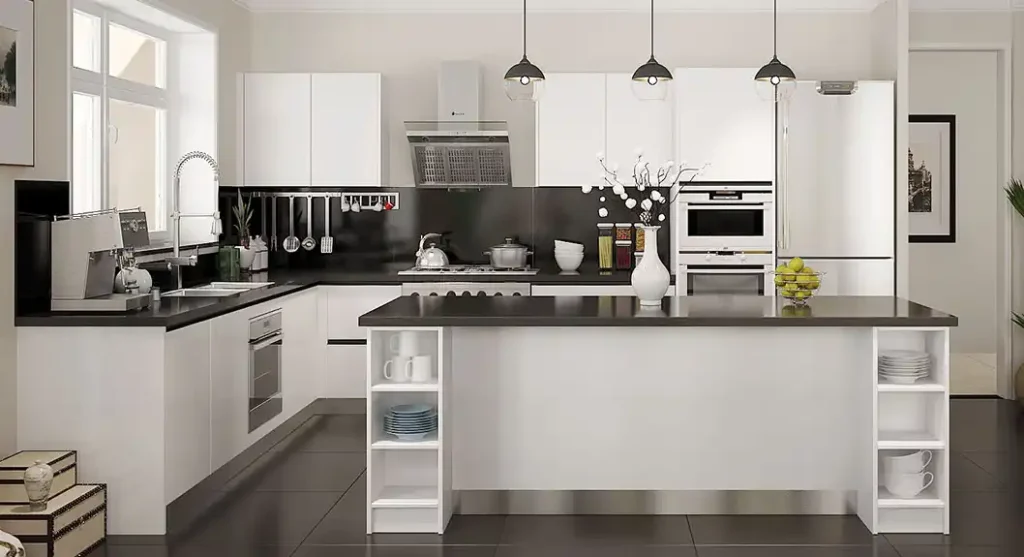
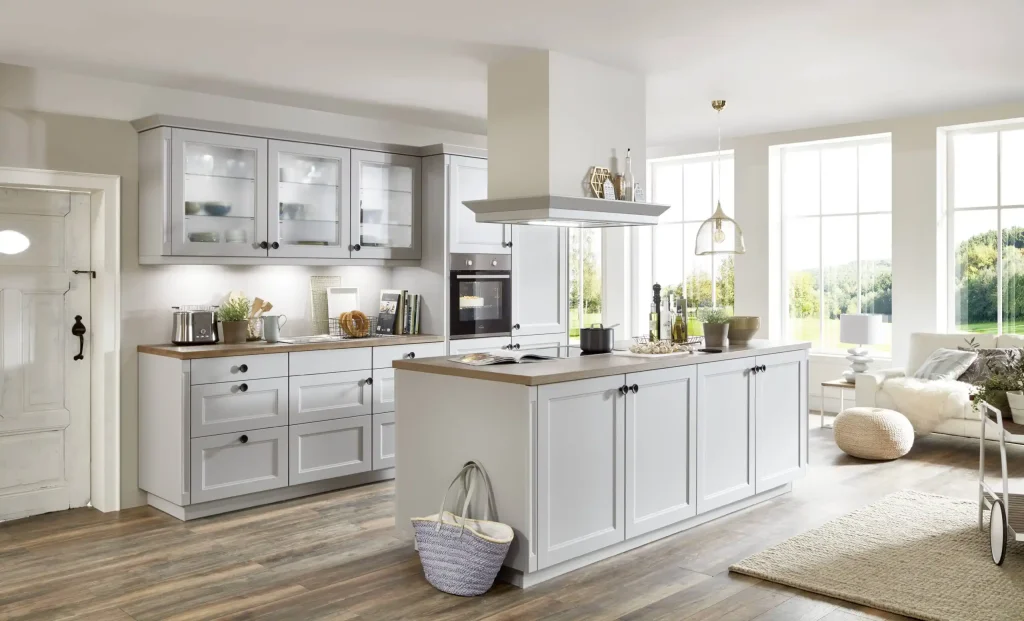
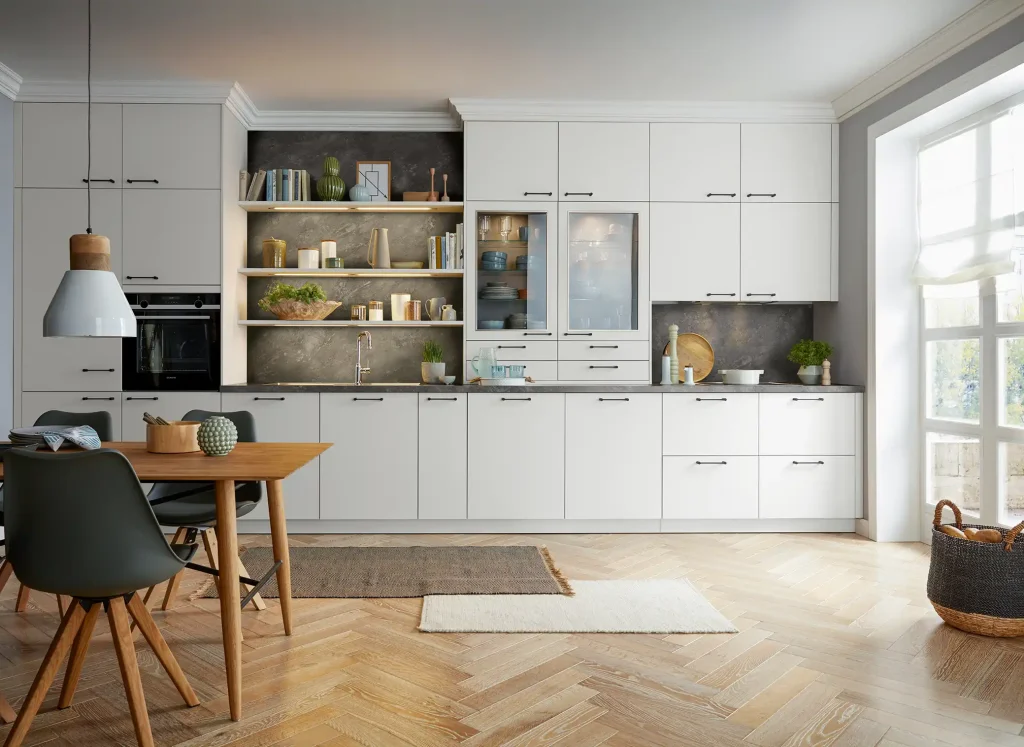

Şunları da sevebilirsiniz
Pozantı Otel Mobilyaları | Adana Otel Mobilya Üretimi
Pozantı Otel Mobilyaları | Adana Otel Mobilya Üretimi