Membrane Kitchen Cabinet Turkey
Membrane Kitchen Cabinet Turkey: The Ultimate Technical, Design, and Sourcing Guide
The international kitchen furniture industry has experienced a significant structural transformation over the last decade. Global procurement networks have shifted focus toward manufacturing hubs that offer a precise combination of advanced technological infrastructure, compliance with strict environmental standards, and economic efficiency. Turkey has emerged as a premier global leader in this transformed landscape.
By combining advanced German CNC engineering with high-grade European polymer materials and flexible production pipelines, Turkish factories have become a primary destination for global buyers. Within the modern interior design and commercial real estate sectors, the demand for a membrane kitchen cabinet from Turkey has reached an all-time high.
This comprehensive technical guide delivers an exhaustive, in-depth analysis of the membrane kitchen cabinet industry in Turkey. We will examine the material science of thermoplastic foils, the physics of vacuum-membrane thermoforming, factory production workflows, architectural styles, quality testing metrics, and international logistics management.
1. Material Science and Anatomy of a Membrane Kitchen Cabinet Turkey
To accurately evaluate a membrane kitchen cabinet from Turkey, one must look beyond surface aesthetics and analyze the engineering composition of the composite panel. A membrane cabinet door—frequently referred to in North American markets as a thermofoil door—is a multi-layered component consisting of a precisely routed engineered wood core completely wrapped in a pressurized thermoplastic foil.
Core Substrate Engineering: Calibrated MDF and HDF Properties
The internal core of a premium Turkish membrane door panel determines its long-term resistance to warping, bending, and structural fatigue. High-tier Turkish exporters strictly avoid low-density particle boards or uncalibrated fiberboards. Instead, they rely on premium Medium-Density Fiberboard (MDF) or High-Density Fiberboard (HDF).
- Density Metrics: The core MDF utilized features a highly consistent density profile ranging from \(760 \text{ kg/m}^3\) to \(860 \text{ kg/m}^3\). This dense consolidation of fine wood fibers ensures that when the panel is routed with deep classical profiles or modern finger-pull channels, the exposed inner fibers remain tight, uniform, and free of large air pockets.
- Moisture-Resistant (MR) Core Upgrades: Given that kitchens are high-humidity zones exposed to steam, boiling water, and frequent spills, Turkish factories utilize green-core MR MDF for high-export lines. This core is engineered with specialized hydrophobic polyurethane or melamine-urea-formaldehyde resins, limiting thickness swelling to less than \(5\%\) when exposed to prolonged humidity.
Thermoplastic Foil Chemistry: PVC, PET, and PP Matrix Solutions
The protective and decorative exterior of a membrane kitchen cabinet from Turkey relies on advanced polymer chemistry. Turkish manufacturers source their foils from elite domestic chemical producers or top-tier German and Italian providers (such as Renolit or Alfatherm).
+-------------------------------------------------------+

|             Thermoplastic Face Layer (PVC / PET / PP)  |  <- 3D Flexible Polymer Film (0.3 - 0.5 mm)
+-------------------------------------------------------+

|             Dual-Component Polyurethane Adhesive      |  <- Heat-Activated Moisture-Curing PUR Matrix
+-------------------------------------------------------+

|             Calibrated MDF Core (760 - 860 kg/m³)     |  <- Moisture-Resistant Milled Fiberboard Core
+-------------------------------------------------------+

|             Melamine Counter-Balance Backing Sheet   |  <- Tension-Matched Structural Layer
+-------------------------------------------------------+
- Polyvinyl Chloride (PVC) Foils: This is the most widely utilized material for standard thermofoil production. Modern Turkish PVC foils range from \(0.3\text{ mm}\) to \(0.5\text{ mm}\) in thickness. They are heavily enriched with UV-stabilizers and impact modifiers to prevent the plastic from becoming brittle or yellowing under sunlight.
- Polyethylene Terephthalate (PET) Foils: As sustainability regulations tighten across Europe and North America, premium Turkish manufacturers have invested heavily in PET membrane technology. PET is a 100% recyclable, PVC-free polymer that delivers exceptional optical clarity for high-gloss designs and a velvet feel for ultra-matte configurations.
- Polypropylene (PP) Foils: Used predominantly in top-tier architectural projects, PP foils offer superior thermal resistance and enhanced scratch barriers, ensuring that the cabinet surfaces can withstand the high-temperature environment near kitchen cooktops and ovens.
Seamless Wrap Mechanics and Balanced Tension
One of the primary engineering advantages of a membrane kitchen cabinet from Turkey is its seamless, monolithic execution. The thermoplastic foil covers the front face and all four lateral edges of the door panel in a single, continuous sheet. This completely eliminates the edge joints and seam lines characteristic of standard laminate or laminate-edged doors, removing the primary point where moisture typically enters.
To prevent the panel from bowing due to the structural tension of the cooled polymer face, the reverse side of the MDF is bonded under high pressure with a color-matched, tension-balanced melamine backing sheet.
2. The Physics of Vacuum-Membrane Thermoforming Technologies
The structural integrity of a membrane kitchen cabinet from Turkey depends entirely on the technical precision of the thermoforming process. Turkish mega-factories deploy computerized, high-pressure vacuum press machinery from world-class equipment manufacturers like Bürkle (Germany) or Orma (Italy), alongside advanced Turkish machinery brands like Özerdem and Trimline.
Step 1: 3D CNC Routing and Surface Calibration
The manufacturing sequence begins on automated multi-tool CNC nesting centers. The raw MDF sheets are cut and carved with millimeter precision.
- Detailing Profiles: Whether carving a traditional Shaker recess, an intricate country-style raised arch, or a modern, handleless J-pull groove, the CNC routers shape the MDF using diamond-tipped cutters operating at up to 24,000 RPM.
- Edge Radiusing: To allow the thermoplastic foil to stretch evenly around corners without tearing or creating thin spots, CNC programs apply a calculated radius (minimum \(2\text{ mm}\) to \(3\text{ mm}\)) to all sharp outer edges.
Step 2: Advanced Two-Component Polyurethane (PUR) Spraying
Once routed, the panels pass through an intensive de-ionizing and dust-extraction tunnel. Every microscopic wood particle must be removed, as any remaining dust would create a visible bump under the smooth thermofoil.
- The Adhesive Formulation: Turkish factories utilize high-performance, water-based dual-component polyurethane (PUR) adhesives. The adhesive is mixed with a cross-linking hardener agent immediately before application.
- Targeted Spray Application: Automated reciprocating spray arms apply the adhesive across the flat face of the panel, with double the volume applied to the deeply carved profiles and absorbent machined outer edges. The panels are then moved through a heated drying tunnel to evaporate the water content, leaving behind a dry, non-tacky layer of crystalline polymer adhesive.
Step 3: The Thermal Vacuum Compression Cycle
The dry-glued panels are arranged on the large shifting bed of the vacuum membrane press. A continuous sheet of the chosen thermoplastic foil is pulled tightly over the entire bed, sealing the chamber.
                  [ Infrared Heating Elements ]
============================================== (Top Heat Shield)
   ~~~~~~~~~~~~~ Thermal Radiation ~~~~~~~~~~~~~
---------------------------------------------- [ Thermoplastic Foil Layer ]
   ▲ ▲ ▲ Positive Compressed Air Pressure (4 to 6 Bar)
   [ Milled MDF Panel ]   [ Milled MDF Panel ]
   ▼ ▼ ▼ Negative Vacuum Suction (-0.9 Bar)
============================================== (Vacuum Bed Plate)
```

*   **Phase A: Softening Heat:** Overhead infrared heating elements warm the foil to its precise softening glass-transition temperature (typically between \(110^\circ\text{C}\) and \(140^\circ\text{C}\)), depending on the specific foil material.
*   **Phase B: Negative Vacuum Pressure:** A powerful industrial vacuum system evacuates all air from beneath the foil sheet, pulling it down to a negative pressure of \(-0.9\text{ bar}\). This forces the softened plastic deep into every routed groove and tight corner of the MDF panels.
*   **Phase C: Positive Top Pressure:** Simultaneously, many advanced Turkish factories engage a top pressure membrane, injecting compressed air at \(4\text{ to }6\text{ bar}\) above the foil. This dual-action compression ensures that every square millimeter of the foil is fused to the MDF core under immense, uniform pressure.
*   **Phase D: Adhesive Activation and Curing:** The combination of heat and pressure activates the underlying PUR adhesive, triggering an irreversible chemical cross-linking reaction. The adhesive cures completely, forming an unbreakable bond between the polymer foil and the wood fibers.

### Step 4: Automated Trimming and Stabilizing Cooling
Once the press cycle concludes (typically lasting between 45 to 90 seconds), the press bed opens, and the fully wrapped panels emerge. Automated slicing blades cut the individual panels free from the continuous foil web.

The doors are then transferred to cooling racks, where they must remain undisturbed for a minimum of 24 hours at a stable room temperature. This allows the polyurethane matrix to complete its chemical curing, ensuring maximum thermal and moisture stability before final packaging.

---

## 3. Design Versatility: Aesthetics and Surface Textures

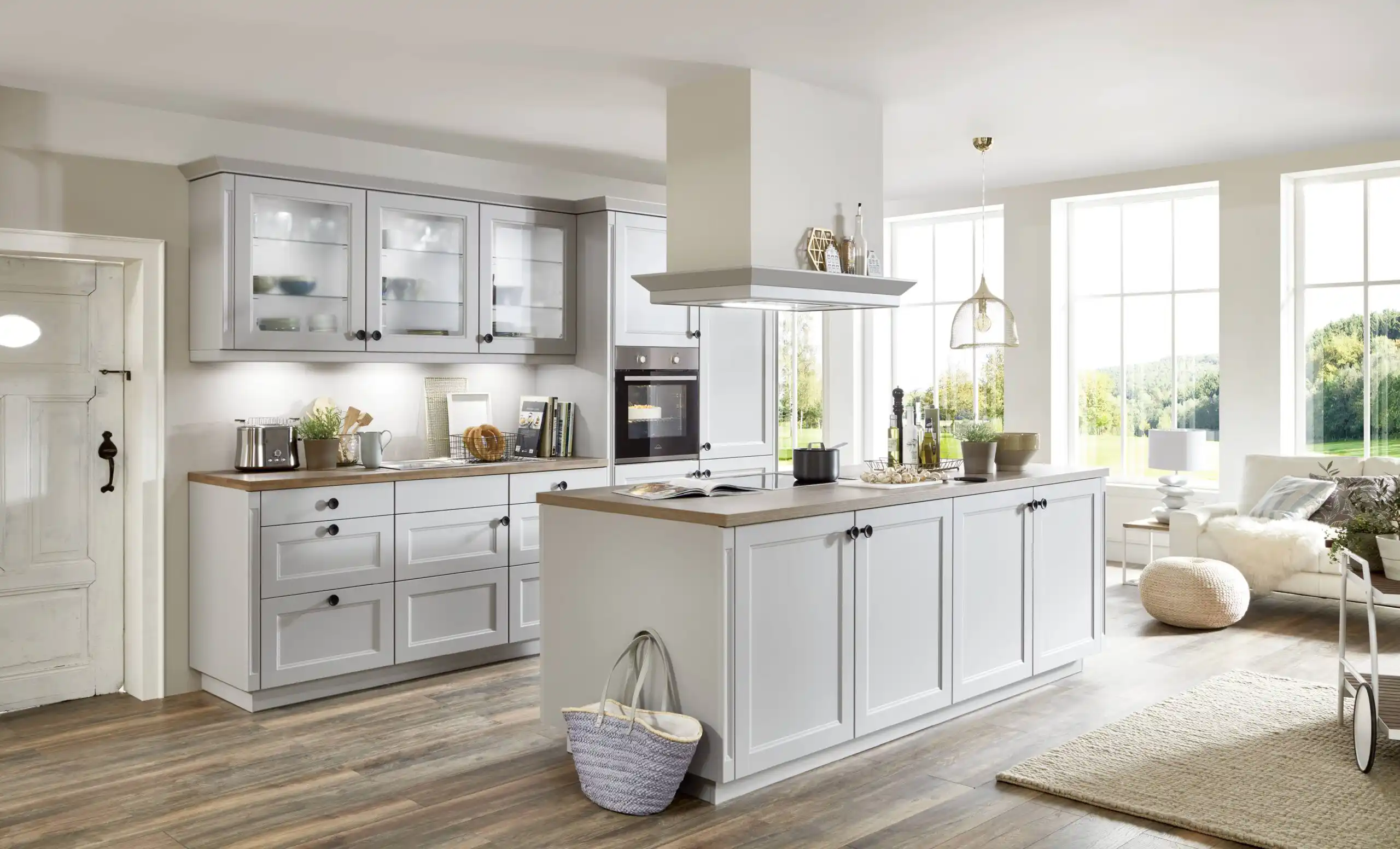
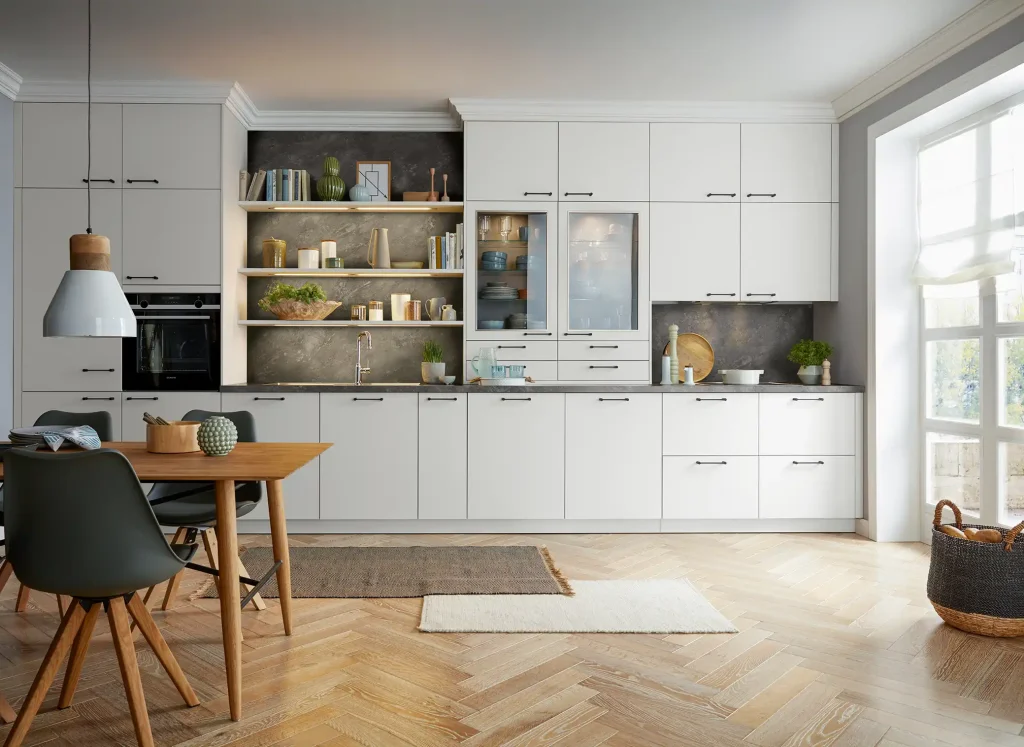
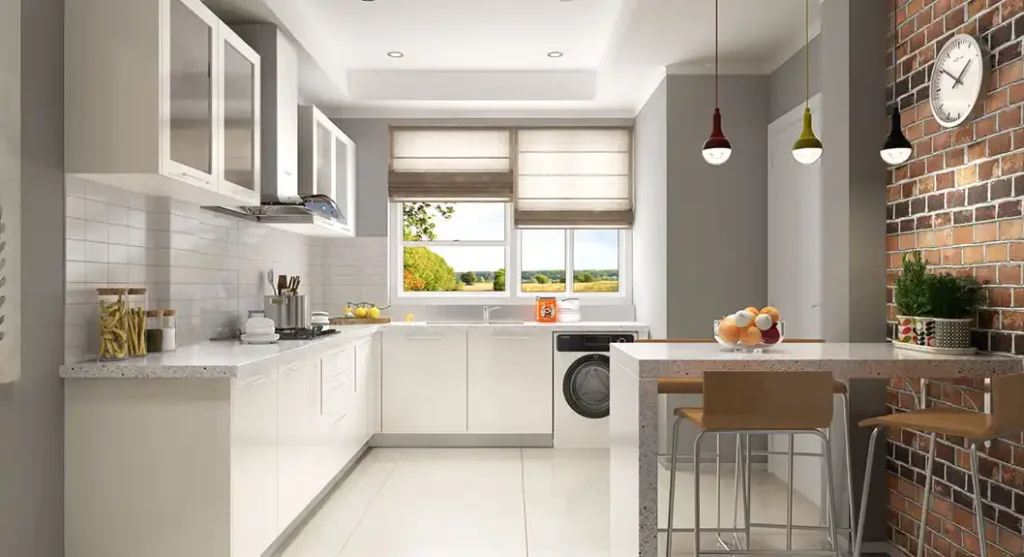
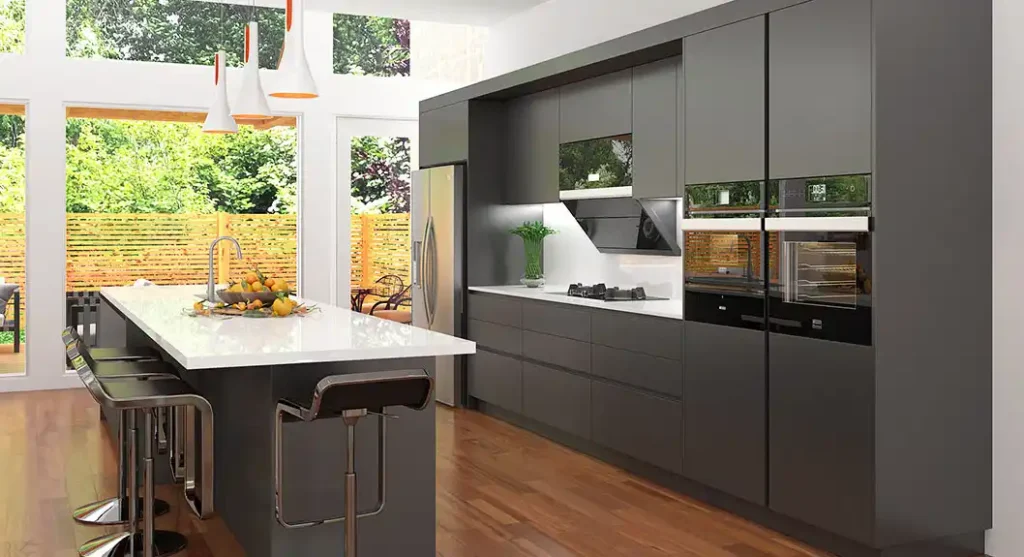
One of the main reasons international developers select a **membrane kitchen cabinet from Turkey** is the wide variety of surface styles available. Unlike rigid laminate or wood veneer panels, thermofoil sheets can cover complex three-dimensional shapes, enabling Turkish manufacturers to offer three primary aesthetic categories.

### 1. Modern High-Gloss and Metallic Styles
High-gloss membrane cabinetry is highly favored in contemporary urban apartments across Europe, the Middle East, and North America.
*   **Reflective Quality:** Premium Turkish high-gloss foils achieve exceptional reflectivity, closely matching the depth of expensive lacquer finishes.
*   **Visual Highlights:** By incorporating metallic powders or pearlescent particles directly into the liquid PVC or PET before extrusion, Turkish manufacturers create striking finishes that shift color tones based on the angle of indoor lighting.

### 2. Super-Matte and Soft-Touch Surfaces
In line with modern trends toward subtle luxury, Turkish factories produce advanced super-matte and soft-touch membrane finishes.
*   **Low Gloss Levels:** These surfaces feature a gloss level under 5 GU (Gloss Units), absorbing light to create a smooth, velvety finish.
*   **Anti-Fingerprint Properties:** Premium matte foils are treated with specialized excimer or electron-beam cured (EBC) top coatings. This structure disperses skin oils instantly, preventing fingerprints, smudge marks, and oil stains from showing on dark cabinet door faces.

### 3. Realistic 3D Wood-Grain and Concrete Textures
Turkish manufacturers are exceptionally skilled at replicating natural materials using advanced embossing techniques.
*   **Synchronized Pore Texturing (EIR):** Premium wood-grain membrane foils utilize Embossed-In-Register (EIR) technology. The physical texture of the foil—such as knots, grain lines, and cracks—lines up exactly with the printed visual design. This creates a realistic texture that is difficult to distinguish from solid wood or expensive veneers.
*   **Industrial Finishes:** Beyond wood textures, Turkish factories offer realistic simulations of distressed concrete, slate stone, brushed bronze, and oxidized iron, giving industrial-style kitchens a modern, textured aesthetic.

---

## 4. Engineering Quality Metrics, Standards, and Certification Compliance

A kitchen cabinet must perform reliably in a demanding environment characterized by frequent mechanical impact, moisture exposure, household chemicals, and shifting ambient temperatures. Turkish manufacturers exporting to strict global markets ensure their production lines comply with rigorous international testing frameworks.

### Structural Performance Benchmarks

| Performance Metric | International Standard | Turkish Manufacturer Compliance Level |
| :--- | :--- | :--- |
| **Delamination Temperature Resistance** | EN 14322 / DIN 68861 | Withstands continuous thermal exposure up to \(85^\circ\text{C}\) without edge peeling. |
| **Surface Scratch Barrier** | ISO 1518 / EN 438-2 | Resists forces up to 3.5N before deep plastic film penetration occurs. |
| **Moisture and Steam Stability** | Resistance to Steam Test | Zero blistering, swelling, or edge lifting after a 60-minute direct steam exposure cycle. |
| **Colorfastness & UV Protection** | ISO 4892-2 (Xenon-Arc) | Rated Grade 4-5 on the grayscale; no visible yellowing or color fading after years of indoor light exposure. |
| **Chemical and Stain Barrier** | EN 12720 | No staining from continuous 16-hour exposure to coffee, red wine, vinegar, or citrus juice. |

### The Shrinkage and Adhesion Matrix
The primary technical failure in poorly made thermofoil cabinets is edge peeling, which occurs when low-quality glue degrades under heat. Premium manufacturers of the **membrane kitchen cabinet from Turkey** prevent this by using high-performance, heat-activated cross-linking adhesives.

This formulation locks the polymer foil in place, ensuring that even under seasonal temperature shifts, the natural shrinkage memory of the stretched plastic film cannot overcome the chemical bond holding it to the MDF core.

---

## 5. Architectural Systems, Internal Carcasses, and Hardware Integration

A high-quality **membrane kitchen cabinet from Turkey** is engineered as a cohesive architectural system where the exterior panels and internal functional hardware operate together smoothly.

### Clean Handleless Architecture: J-Pull and Gola Channel Profiles
The flexible nature of thermoforming allows membrane foils to wrap smoothly into deep, complex handle profiles milled directly into the MDF core:
*   **Integrated J-Pull Doors:** The top edge of a base cabinet door or the bottom edge of a wall cabinet door is milled into an ergonomic J-shape curve. The vacuum press pulls the thermofoil seamlessly over this contour, creating a clean, handleless style that does not require external metal hardware.
*   **Aluminum Gola Systems:** The cabinet boxes are engineered to include recessed aluminum Gola profiles (horizontal channels for base units, vertical channels for tall pantry units). This allows users to open doors easily by pulling them from behind the flat door panel, maintaining clean, uninterrupted design lines across the kitchen.
[ Quartz Countertop ]
[ Recessed Aluminum Gola Channel ] <— User pulls door from behind the panel
+——————-+
| |
| Seamless Membrane |
| Cabinet Door Panel|
| |
+——————-+
### Premium Hardware Systems: Blum, Grass, and Samet
The daily performance of Turkish cabinetry relies heavily on European-standard engineering partnerships:
*   **Blum (Austria) & Grass (Germany):** Turkish luxury lines come configured with Blum Clip Top Blumotion hinges and Legrabox drawer runner systems. These components feature fluid-dampened soft-closing mechanisms and dynamic load capacities ranging from \(40\text{ kg}\) to \(70\text{ kg}\) per drawer unit.
*   **Samet (Turkey):** As a premier domestic manufacturing giant, Samet produces world-class, award-winning lift-up flap mechanisms, slim-walled drawer systems (such as the Alpha Box and Flow box series), and soft-closing hinges. These components deliver reliable functionality and exceptional durability at a highly optimized cost point.

### Carcass Construction and Internal Shell Engineering
While the exterior doors use premium thermoformed foils, the internal cabinet box (carcass) requires a rugged, easy-to-clean structure. Turkish factories construct these internal units using \(18\text{ mm}\) thick melamine-faced moisture-resistant particle board or MDF. All exposed carcass edges are edge-banded with \(0.8\text{ mm}\) to \(1\text{ mm}\) thick impact-resistant ABS strips using waterproof PUR adhesives to protect the cabinet from moisture and everyday wear.

---

## 6. Sourcing Geography: Major Industrial Clusters in Turkey

The production of furniture and cabinetry in Turkey is organized into massive, highly specialized Organized Industrial Zones (OSB - *Organize Sanayi Bölgesi*). For international procurement managers, real estate developers, and wholesale distributors planning an efficient sourcing trip, targeting the correct geographic hub is critical.

### 1. Inegöl (Bursa): The Epicenter of Integrated Woodworking
*   **Industrial Landscape:** Inegöl is one of the largest and most comprehensive furniture manufacturing clusters in Europe. It houses an entire industrial ecosystem of raw wood processors, advanced MDF production plants, chemical suppliers, and large-scale cabinetry factories.
*   **Best Suited For:** Medium-to-large multi-residential housing projects, wholesale container distribution, and mid-to-high tier custom branding. Inegöl factories excel at handling bulk exports efficiently while maintaining reliable production schedules.

### 2. Kayseri: The Automated Mass-Production Powerhouse
*   **Industrial Landscape:** Located in Central Anatolia, Kayseri houses massive industrial manufacturing plants. These factories rely on high-speed, automated flat-line lamination setups and computerized vacuum presses.
*   **Best Suited For:** Large-scale commercial developments, affordable housing projects, and global retail chains that require thousands of standardized linear meters of cabinetry with absolute dimensional consistency.

### 3. Istanbul (Modoko, Masko, and Tuzla OSB): Design Innovation
*   **Industrial Landscape:** Istanbul combines high-end design showrooms with advanced production facilities in the Tuzla, Ikitelli, and Hadimkoy industrial zones. It is the center for design innovation, custom detailing, and architectural planning in Turkey.
*   **Best Suited For:** Boutique real estate developments, high-end custom penthouses, and complex architectural projects that require close collaboration on design details and custom sizing.

### 4. Ankara (Siteler): Premium Woodworking Craftsmanship
*   **Industrial Landscape:** Siteler in Ankara is one of Turkey's oldest and most respected woodworking clusters. It is renowned for skilled craftsmanship, custom millwork, and high-precision detailing.
*   **Best Suited For:** Specialized high-end projects requiring a mix of thermoformed membrane technology and intricate, classic solid wood integration.

---

## 7. Comparative Strategic Analysis: Turkey vs. Italy vs. China

For real estate developers, commercial procurement directors, and hotel construction managers, selecting a manufacturing country is an important financial decision. A **membrane kitchen cabinet from Turkey** offers a highly compelling value proposition when compared to products from other major global manufacturing hubs.

### 1. Turkey vs. Italy (The Luxury vs. Cost Balance)
*   **Quality Comparison:** Premium Turkish factories use identical German CNC machinery and the exact same premium European polymer foils as top-tier Italian brands. The level of physical craftsmanship, adhesion strength, and edge quality is virtually indistinguishable.
*   **The Financial Advantage:** Due to lower operating overhead, localized energy infrastructure, and highly optimized labor rates, a premium membrane kitchen manufactured in Turkey is typically \(40\%\) to \(60\%\) more cost-effective than an identical setup made in Italy.

### 2. Turkey vs. China (The Logistics vs. Tariff Balance)
*   **Material Reliability:** Entry-level Chinese factories often use thin PVC foils or low-grade adhesives, which can lead to color fading and edge delamination over time. Turkish manufacturers use authentic, thick polymer foils that meet strict European Union quality standards.
*   **Logistical Efficiency:** For buyers across Europe, the Middle East, and the East Coast of North America, Turkey offers significantly shorter shipping times. This protects project timelines from the delays often associated with East Asian shipping routes.
*   **Tariff Protection:** Cabinetry sourced from Turkey avoids the heavy anti-dumping duties and punitive trade tariffs that many Western nations place on Chinese wood and furniture products.

---

## 8. International Logistics, Packaging Protocols, and Supply Chain Management

Shipping a container of high-quality **membrane kitchen cabinet from Turkey** to international ports requires careful attention to packaging and logistics. Thermoplastic surfaces are sensitive to friction and pressure during ocean transport, making proper preparation essential.

### Rigid Pre-Assembled vs. Knock-Down (Flat-Pack) Shipping Configurations
Turkish factories provide two primary shipping formats depending on project scale and destination requirements:
1.  **Rigid Assembly (Pre-Assembled Cabinets):** Each cabinet box is completely assembled, square-checked, and fitted with its doors and hardware right at the factory. This guarantees flawless alignment, reduces on-site installation time, and minimizes mistakes by local tradespeople.
2.  **Flat-Pack / Ready-to-Assemble (RTA):** Panels are shipped disassembled in flat boxes. This method maximizes container volume, making it highly economical for long-distance transport to regions like Australia or the West Coast of North America.

### The Protective Packaging Standard
To ensure every panel arrives in pristine condition, Turkish exporters implement a strict, multi-layer packaging protocol:
+————————————————————-+
| Heavy-Duty 5-Ply Corrugated Outer Carton Box |
+————————————————————-+
| High-Density EPS Foam Corner & Edge Guards (Impact Buffer) |
+————————————————————-+
| Soft Polyethylene Foam Interleaving Layers (Anti-Friction) |
+————————————————————-+
| Co-Extruded Protective Paper Wrap or PE Surface Film |
+————————————————————-+
1.  **The Primary Surface Protection:** A factory-applied protective film shields the thermofoil face from dust and scratches. This film stays on the panels during cutting, edge-banding, shipping, and installation, and is peeled off only when the kitchen is ready for handover to the client.
2.  **The Friction Barrier:** Panels are separated by soft polyethylene foam sheets to prevent micro-scratching caused by transit vibrations.
3.  **The Impact Buffer:** High-density expanded polystyrene (EPS) foam corner blocks and edge guards protect the package against accidental drops or shifting inside the shipping container.
4.  **The Outer Shield:** The entire package is sealed inside a heavy-duty, moisture-resistant 5-ply corrugated cardboard box, which is then securely strapped onto reinforced wooden pallets for safe forklift handling.

### Shipping Times and Global Trade Corridors
Turkey’s central location provides excellent logistics advantages for international transport:
*   **To Western Europe:** Overland freight trucks deliver from Istanbul or Bursa to distribution hubs in Germany, France, or the UK within 5 to 7 days. Intermodal shipping via Trieste (Italy) provides an efficient, low-carbon transport option.
*   **To the United States & Canada:** Regular container ships depart weekly from major Turkish ports, including Ambarli (Istanbul), Gemlik (Bursa), and Izmir. Average ocean transit times range from 18 to 22 days to East Coast ports like New York, Savannah, and Miami.
*   **Streamlined Customs (The ATR Advantage):** Thanks to the Customs Union agreement between Turkey and the European Union, goods travel smoothly with ATR certificates, eliminating import tariffs for European buyers and expediting customs clearance.

---

## 9. Environmental Responsibility and Sustainable Manufacturing Certifications

Modern real estate projects and commercial developments require strict compliance with green building standards, including LEED, BREEAM, and WELL certifications. The Turkish cabinetry industry has made substantial investments to align its practices with global environmental requirements.

### Non-Toxic Polymer Chemistry and Indoor Air Quality
Pure polymer membrane foils (especially modern PET and PP formulations) are inherently stable and do not contain volatile organic compounds (VOCs) or harmful plasticizers like phthalates. Unlike lower-grade varnishes or solvent-based paint finishes, premium membrane panels do not off-gas toxic chemicals into the home.

Furthermore, the core MDF sheets used by top-tier Turkish exporters comply with strict CARB Phase 2 and European E0 standards, ensuring exceptionally low formaldehyde emissions for a healthier indoor environment.

### Sustainable Forestry and Supply Chain Tracking
Leading manufacturers of the **membrane kitchen cabinet from Turkey** maintain full Forest Stewardship Council (FSC) chain-of-custody certifications. This guarantees that all wood fibers used in the core MDF substrate come from responsibly managed forests and verified, legal timber sources.

---

## 10. Professional Installation and Long-Term Maintenance Protocols

To ensure that a **membrane kitchen cabinet from Turkey** maintains its premium look and performance for decades, proper installation techniques and regular maintenance are essential.

### Precision Installation: Laser-Guided Levelling
Because contemporary cabinetry features clean, geometric lines, minor misalignments will be highly visible. Experienced installation teams utilize multi-line 3D laser levels to establish a true horizontal line across the space.

Any unevenness in the floor or walls is corrected using heavy-duty adjustable legs (such as those from Italian brand Camar), which are later concealed behind matching plinths fitted with soft rubber floor seals to keep out dust and moisture.
Vertical Drywall Line
|
+——————+
| Membrane Cabinet | <— Micro-leveled via adjustable legs
+——————+
| Adjustable Leg | <— Camar Heavy-Duty Leveling System
+——————+
==================== Finished Floor Level
### Heat Shielding Around Appliances
A critical technical requirement when installing membrane/thermofoil cabinetry is the addition of heat shields around high-heat appliances. Installers fit slim, heat-reflecting aluminum strips along the vertical carcass edges directly adjacent to ovens, dishwashers, and ranges. These shields reflect radiant heat away from the door edges, ensuring the ambient temperature remains well below the foil's softening threshold.

### Long-Term Care and Cleaning Instructions
Maintaining the beautiful finish of a premium Turkish membrane kitchen is simple and straightforward when following a few basic guidelines:
*   **Daily Wipe-Downs:** Use a soft, lint-free microfiber cloth dampened with warm water and a drop of pH-neutral liquid dish soap. Avoid paper towels, coarse sponges, or old rags, which can contain abrasive fibers that leave faint swirl marks over time.
*   **Chemicals to Avoid:** Never use cleaning agents that contain ammonia, acetone, thinners, bleach, or abrasive scouring powders. These harsh chemicals can break down the outer polymer structure, permanently dulling the surfaces or altering the texture of matte finishes.
*   **Moisture Management:** While premium membrane cabinetry is highly water-resistant due to seamless face engineering and PUR hot-melt bonding, it is best practice to avoid hanging wet kitchen towels directly over the cabinet doors. Additionally, run the range hood during cooking to prevent concentrated steam from settling on the upper cabinet edges.

---

## 11. Conclusion: The Strategic Value of Sourcing Turkish Membrane Cabinetry

Specifying or purchasing a **membrane kitchen cabinet from Turkey** offers an exceptional combination of design flexibility, advanced material engineering, and smart financial value. By using high-density moisture-resistant MDF cores, premium European polymer films, and state-of-the-art German and Italian machinery, Turkish manufacturers deliver cabinetry that meets or exceeds international luxury benchmarks at a highly optimized cost.

Whether you are an international real estate developer coordinating a multi-unit apartment complex or an interior designer creating a custom residential kitchen, Turkey’s modern manufacturing hubs provide the scale, flexibility, and logistical efficiency to bring your high-end design concepts to life.

---

To help us tailor technical specifications or supply chain recommendations for your upcoming project, could you share the **overall scale or volume** of your requirements (e.g., a single custom residence or a multi-family commercial development), your **preferred finish** (high-gloss, super-matte, or textured wood-grain), and your **target shipping destination**?

Şunları da sevebilirsiniz
Pozantı Otel Mobilyaları | Adana Otel Mobilya Üretimi
Pozantı Otel Mobilyaları | Adana Otel Mobilya Üretimi