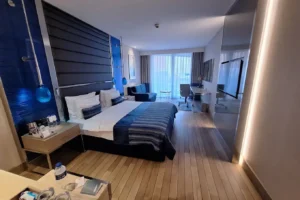
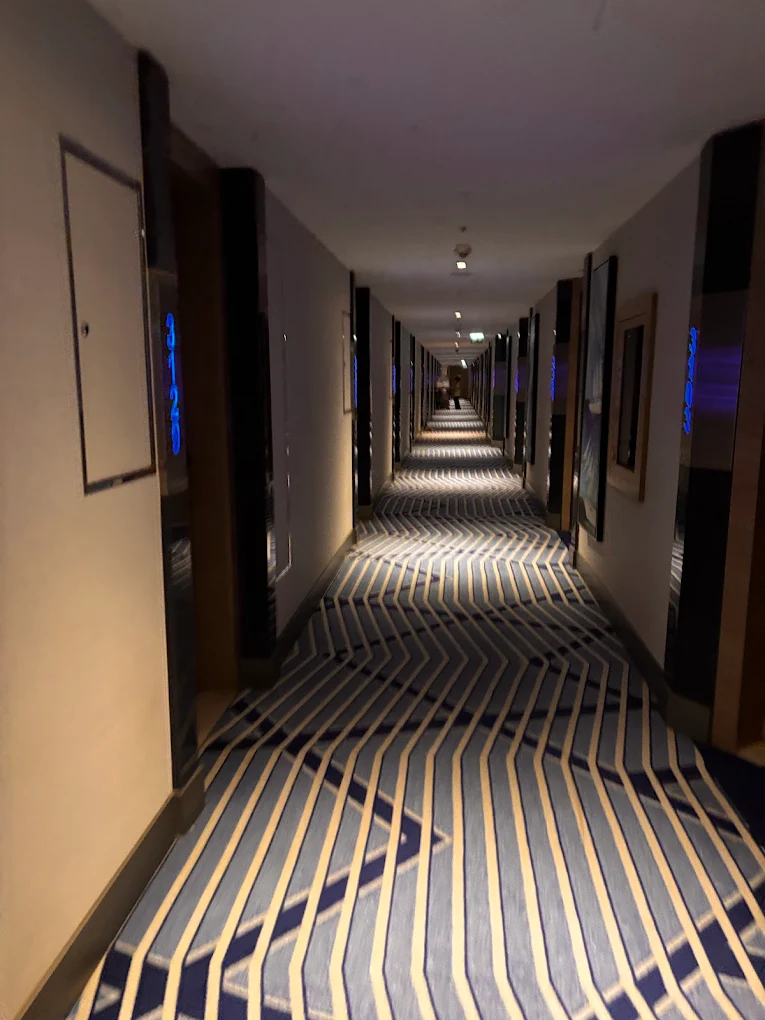
Hotel Doors Turkey
The Ultimate Guide to Hotel Doors in Turkey: Premium Standards, Manufacturing Excellence, and Architectural Trends
Hotel doors are not merely functional entryways; they are critical components that define a hospitality property’s safety, acoustic comfort, aesthetic identity, and regulatory compliance. In Turkey’s booming hospitality and construction sectors, the manufacturing of Hotel Doors Turkey has evolved into a global powerhouse. Turkish manufacturers combine centuries-old woodworking traditions with state-of-the-art European automated machinery to produce high-performance doorsets. These doors meet stringent international standards for fire resistance, acoustic insulation, and security.
This comprehensive technical guide explores the engineering, material science, regulatory frameworks, and interior design trends shaping the production of premium hotel doors in Turkey. It provides real estate developers, architects, interior designers, and hotel procurement managers with the deep technical insights required to source high-quality doorsets.
1. Architectural and Engineering Requirements for Hotel Doors
Hotel doors must withstand extreme operational demands. Unlike residential doors, a hotel guest room entrance door experiences hundreds of cycles daily. It is subjected to impact from heavy luggage, cleaning carts, and varying environmental conditions between the air-conditioned guest room and the corridor. Turkish engineering approaches these challenges through a system-based philosophy, viewing the door not as a simple slab, but as a complete engineered doorset.
Mechanical Durability and Traffic Classification
Hotel doors must meet rigorous mechanical endurance tests to ensure structural integrity over decades of use. Turkish manufacturers test and classify doors according to European Standards (EN 1192 and EN 12400).
- Operating Cycles: Premium guest room doors are engineered to achieve Class 6 (Heavy Duty) or Class 7 (Severe Duty) ratings under EN 12400, successfully enduring between 100,000 and 200,000 opening and closing cycles without structural degradation or sag.
- Impact Resistance: Hardwood framing and high-density core structures prevent warping, twisting, or denting from localized impacts.
The System-Based Doorset Philosophy
A common mistake in commercial procurement is sourcing door leaves, frames, hinges, and seals from separate suppliers. Leading Turkish factories emphasize the complete doorset approach. Every component—including the core, timber frame, intumescent seals, acoustic drop seals, hinges, and electronic locks—is tested together as a single unified system in accredited laboratories. This guarantees that the laboratory-certified fire and acoustic ratings are fully achieved upon installation on-site.
2. Structural Composition and Material Engineering
The internal engineering of a hotel door determines its lifetime performance, stability, and failure resistance. Turkey’s manufacturing sector utilizes advanced composite core technologies and precision-machined timber components to balance weight, strength, and insulation.
Core Technologies
The core is the heart of the hotel door. Turkish factories utilize three primary core configurations depending on the project’s performance specifications:
| Core Type | Structural Composition | Primary Application | Key Performance Metrics |
|---|---|---|---|
| Tubular (Sauerland) Chipboard | Extruded chipboard with internal longitudinal cylindrical voids. | Standard guest rooms, interconnected doors, bathroom doors. | Weight reduction up to 40%, basic acoustic insulation (28dB–32dB). |
| Solid Particleboard / VL Core | High-density solid flaxboard or compressed wood fiber matrix. | Acoustic-rated and fire-rated guest room entry doors. | Excellent stability, fire resistance up to 30/60 minutes, acoustics (35dB–42dB). |
| Multi-Layered Mineral Core | Non-combustible calcium silicate boards layered with technical fibers. | High-performance fire doors (90 to 120 minutes). | Maximum thermal resistance, high weight, structural rigidity. |
Frame and Architrave Engineering
To prevent warping caused by temperature and humidity differentials between guest rooms and corridors, Turkish manufacturers avoid solid un-laminated timber for structural frames. Instead, they use engineered Finger-Jointed Solid Wood or Multi-layer Laminated Veneer Lumber (LVL).
- Moisture Stabilization: The raw timber undergoes computerized kiln-drying to achieve an optimal moisture content of 8% to 12%. This process minimizes natural wood expansion and contraction.
- Adjustable Architraves: Engineered MDF or marine-grade plywood architraves feature telescopic tongue-and-groove adjustment systems. These systems allow installers to compensate perfectly for varying wall thicknesses on-site, ensuring a seamless visual finish.
3. Acoustic Insulation Performance (STC and dB Ratings)
Acoustic privacy is one of the most critical factors influencing guest satisfaction scores. High-performance Hotel Doors Turkey are engineered to block complex frequencies, ranging from low-frequency corridor footsteps to high-frequency vocal sounds.
Decibel (dB) Ratings vs. Real-World Performance
While standard interior doors offer a low sound reduction index of 15dB to 20dB, premium Turkish guest room entrance doorsets are certified to achieve acoustic performance levels between 38dB and 45dB (Rw) under ISO 10140-2 and ASTM E90 standards.
- 35dB to 38dB: Suitable for mid-scale select-service hotels; subdues standard speech but loud conversations may remain slightly audible.
- 40dB to 45dB: The benchmark for luxury 5-star international hotel brands. It renders adjacent corridor noises and loud conversations completely inaudible inside the guest room.
Perimeter Gasket and Automatic Drop Seal Mechanics
Acoustic performance is only as good as the door’s sealing system; a microscopic 1mm gap around a door perimeter can reduce a 40dB-rated door to a mere 25dB in practice. To combat this sound leakage, Turkish doors utilize specialized dual-gasket networks:
+-------------------------------------------------------------+

|               ACOUSTIC & FIRE SEAL CROSS-SECTION             |
+-------------------------------------------------------------+

|                                                             |
|   [Door Frame]                                              |
|       |                                                     |
|       +--> [Dual-Slot Silicon/EPDM Gasket]                  |
|            (Provides continuous perimeter air-tight seal)   |
|       |                                                     |
|   [Door Leaf] <---------------------------------------------+

|       |                                                     |
|       +--> [Chemical Intumescent Fire Tape]                 |
|            (Expands 10x–25x at 180°C to lock out smoke)      |
|                                                             |
+-------------------------------------------------------------+
- Perimeter Gaskets: Dual-slot silicone or EPDM synthetic rubber gaskets are routed into the door frame rebate. These materials retain their elasticity over decades and do not harden over time.
- Automatic Mechanical Drop Seals: Recessed into a concealed groove at the bottom of the door leaf, these heavy-duty mechanical seals deploy automatically when the door closes. A spring-loaded plunger presses against the frame, dropping a neoprene profile flat against the floor finish to seal the bottom gap without causing friction during the door’s swing.
4. Fire Resistance and Safety Compliance
Fire safety compliance is non-negotiable in commercial hospitality architecture. Turkish manufacturers produce fire-rated doorsets certified by leading global notification bodies such as Intertek (Warnock Hersey), BM TRADA, and Exova Warringtonfire.
International Standards Compliance
Turkish doors are fully compliant with European standard EN 1634-1 and American standard UL 10C. These tests subject the doorsets to real fire furnace environments, where temperatures exceed 900°C. Doors are rated based on their ability to maintain structural integrity (E) and thermal insulation (I) over specific durations:
- FD30 / EI30 (30 Minutes): The minimum baseline requirement for standard hotel guest room corridors across Europe and the Middle East.
- FD60 / EI60 (60 Minutes): Mandatory for high-rise hospitality structures, mechanical rooms, service shafts, and high-occupancy public areas.
- FD90 / EI90 & FD120 / EI120 (90/120 Minutes): Designed for emergency exit stairwells, electrical switch rooms, and critical fire-zoning partitions.
Intumescent Seal Chemistry and Activation
The fire-blocking capabilities of these doors depend on high-quality graphite or sodium-silicate-based intumescent strips concealed under the veneer or inside the frame rebates. When temperatures reach approximately 180°C, these chemical strips undergo rapid thermal expansion. They swell to 10 to 25 times their original volume, transforming into a thick carbonaceous char that seals all gaps between the leaf and frame. This expansion completely prevents toxic smoke, hot gases, and flames from penetrating the guest room.
5. Electronic Lock Integration and Access Control
Modern hotel operations rely on secure, contactless access control infrastructure. The production of Hotel Doors Turkey involves precision CNC machining to integrate complex electronic locks, keeping pace with global hospitality innovations.
CNC Precision Mortising for Global Lock Brands
Turkish factories utilize automated 5-axis CNC machining centers to mill lock pockets and wire channels with tolerances under 0.1mm. This precision allows for out-of-the-box compatibility with premier electronic lock systems, including:
- Assa Abloy (VingCard): Essence, Signature, and Novel series.
- Dormakaba: Saflok and Quantum series.
- Salto Systems: XS4 and Danalock platforms.
Wired vs. Battery-Powered Digital Lock Infrastructure
Architects must decide early in the design phase whether the project will utilize offline battery-powered locks or online hardwired access control systems:
- Battery-Operated Locks (RFID / BLE): These units require internal mortise prep and a precise face-hole cutout for the card reader and handle lever. The door remains autonomous, reducing installation wiring complexity.
- Hardwired Online Access Systems (Power-over-Ethernet / RS485): These systems require an internal concealed conduit drilled vertically through the entire core of the door leaf. This wire pathway connects the lock to a concealed power transfer hinge or armature loop in the frame, enabling real-time central security monitoring and instant room status updates.
6. Surface Finishes, Materials, and Aesthetic Customization
The surface finish of a hotel door defines its visual impact and plays a vital role in the hotel’s overall interior design scheme. Turkish manufacturers offer a wide selection of surface finishes, ensuring the perfect balance between luxury aesthetics and commercial scratch resistance.
Natural Wood Veneers and Book-Matching Techniques
For luxury and boutique properties, natural wood veneers are the premium choice. Turkish craftspeople select high-grade logs of European White Oak, American Walnut, Eucalyptus, Teak, and Exotic Ebony.
- Matching Styles: Veneer leaves are sliced and stitched using advanced computerized flitch-matching machinery. Designers can choose Book-Matching for symmetrical grain mirroring, Slip-Matching for a uniform linear look, or Random-Matching to emulate natural rustic timber variations.
- UV Lacquering: To shield natural wood from bleaching by sunlight and scratching from guest keycards, surfaces are treated with multiple coats of automated, multi-angle polyurethane or UV-cured acrylic transparent lacquers.
High-Pressure Laminates (HPL) for High-Traffic Properties
For select-service, economy, corporate, or extended-stay airport hotels, High-Pressure Laminate (HPL) finishes from global brands like Formica, Wilsonart, or Egger are widely preferred.
- Durability: HPL sheets (typically 0.8mm to 1.2mm thick) are bonded under extreme thermal pressure to the door’s MDF skin.
- Performance: HPL provides exceptional resistance to impact, chemical cleaning agents, stains, and cigarette burns, maintaining a pristine appearance for years.
Lacquer and Paint Formulation
Modern minimalist hotel designs frequently specify solid color matte or high-gloss painted finishes. Turkish suppliers use industrial-grade Polyurethane (PU) Lacquer Coating applied in dust-free, pressurized spray booths. This prevents airborne particulate contamination during the curing process, resulting in a perfectly smooth finish.
Design Trends: Inlays, Grooves, and Hidden Frame Profiles
- Metal Inlays: PVD-coated stainless steel or brass metallic strips are embedded flush into the door face to create sleek geometric highlights.
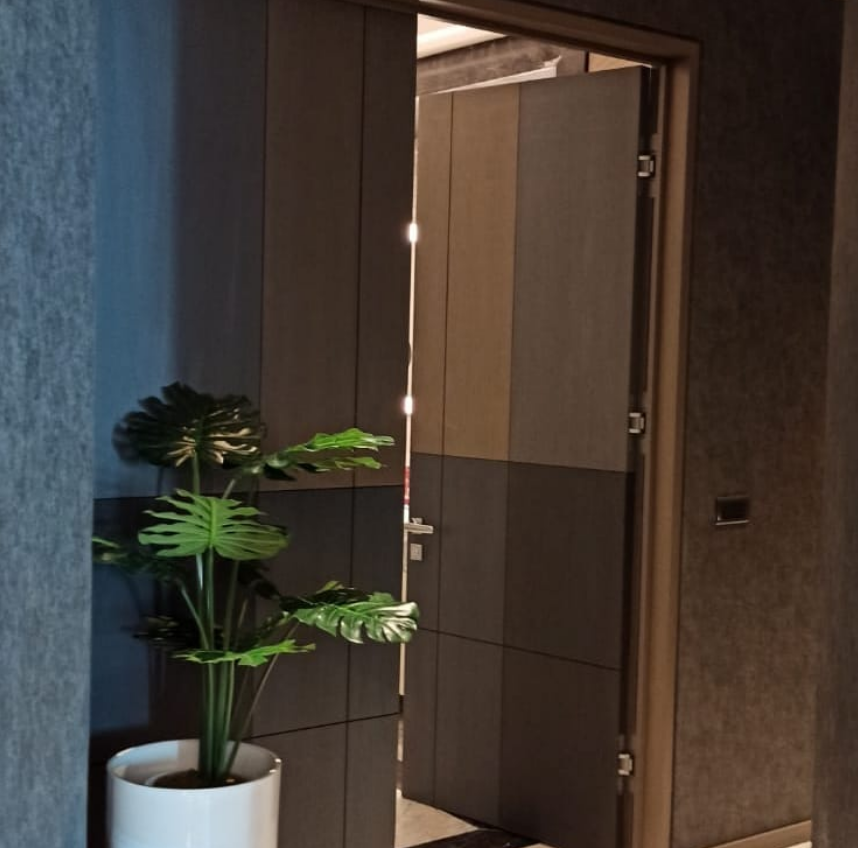
- Concealed / Flush-to-Wall Frames: A major trend in luxury hotel design is the invisible door frame. The aluminum frame is embedded directly into the drywall or brickwork partition. Once plastered and painted over, the frame disappears, leaving the door leaf perfectly flush with the corridor wall paneling.
7. Sustainability, Certifications, and Eco-Labeling
As sustainable tourism and green building certifications like LEED, BREEAM, and DGNB become standard across the global hospitality sector, the environmental footprint of building materials faces intense scrutiny.
Certified Sourcing: FSC and PEFC Compliance
Leading manufacturers of Hotel Doors Turkey maintain strict chain-of-custody tracking for all timber inputs. They source raw wood and wood products exclusively from responsibly managed forests certified by the Forest Stewardship Council (FSC) or the Programme for the Endorsement of Forest Certification (PEFC). This ensures that the procurement of logs does not contribute to illegal deforestation or biodiversity loss.
Low-VOC Coatings and Formaldehyde Regulations
Indoor air quality is essential for guest well-being. Turkish factories conform to strict European chemical compliance standards:
- E1 and E0 Core Classification: All chipboards and MDF panels utilized in production have ultra-low formaldehyde emissions, meeting or exceeding EN 717-1 standards.
- Water-Based Lacquers: The transition toward water-based, zero-VOC (Volatile Organic Compound) stains and clear coats eliminates toxic off-gassing, creating a healthier indoor environment for both factory workers and future hotel guests.
8. Sourcing, Logistics, and Quality Assurance in Turkey
Turkey’s geographic positioning at the crossroads of Europe, Asia, and Africa, combined with its robust industrial manufacturing hubs, makes it a highly competitive sourcing destination for global hotel projects.
                  +-----------------------------------+

                  |   TURKISH HOTEL DOOR EXPORT HUB   |
                  +-----------------------------------+
                                    |
            +-----------------------+-----------------------+

            |                       |                       |
            v                       v                       v
    [Strategic Location]    [Advanced Logistics]    [Rigorous Testing]
     Crossroads of Europe,   Intermodal shipping     ISO 9001 factories
     Middle East, & Africa   via major sea ports     and international
     for fast lead times.    and overland routes.    safety certifications.
Strategic Regional Hubs
The Turkish door manufacturing industry is clustered in specialized industrial zones equipped with advanced timber-processing infrastructure:
- Kayseri & Inegöl (Bursa): Renowned as massive integrated furniture and door production epicenters, utilizing heavy automation to handle high-volume commercial orders efficiently.
- Istanbul & Kocaeli: Specializing in complex, custom architectural doorsets, high-end bespoke boutique finishes, and specialized engineering for fire and acoustic compliance.
- Kastamonu: Home to primary industrial wood composite processing facilities supplying high-density engineered fiberboards and technical core materials.
Factory Testing and Quality Control Standards
Reputable Turkish exporters operate under comprehensive ISO 9001:2015 Quality Management Systems. Before dispatching any shipment, internal quality assurance teams conduct rigorous multi-point inspections:
- Moisture Check: Handheld digital pin meters verify the moisture level of every batch.
- Dimensional Tolerance: Digital calipers check thickness, height, and width to ensure variance remains under ±0.5mm.
- Planarity and Flatness Verification: Laser levels inspect door leaf alignment across diagonal planes to prevent the dispatch of bowed or warped panels.
International Shipping, Packing, and Logistics
Shipping heavy, finished architectural woodwork requires specialized packaging to prevent damage during transit. Turkish logistics networks excel at intermodal transport:
- Protective Packaging: Door leaves are individually edge-protected with high-density polyethylene foam corner guards, shrink-wrapped in heavy-gauge plastic film, and packed vertically into heavy-duty reinforced wooden crates or pallets.
- Logistical Efficiencies: Shipments destined for Europe or the Middle East travel via rapid overland truck freight or roll-on/roll-off (Ro-Ro) shipping vessels. Orders for the Americas, Africa, and Central Asia are containerized via major Turkish deep-water shipping terminals like Ambarlı (Istanbul), Mersin, and Aliağa (Izmir), offering significantly faster transit times than East Asian competitors.
9. Comprehensive Troubleshooting and Maintenance Blueprint
To ensure that commercial hospitality doorsets maintain their fire safety performance, sound attenuation, and smooth operational mechanics over decades, facility managers must implement a strict preventative maintenance protocol. Below is an actionable technical matrix detailing common operational challenges, root-cause diagnostics, and professional remedy procedures.
Operational Diagnostics and Remediation Matrix
| Symptom / Failure Mode | Root Cause Analysis | Corrective Field Action |
|---|---|---|
| Reduction in Acoustic Performance (Guests reporting increased corridor noise leakage). | 1. Mechanical failure or incorrect calibration of the automatic drop seal. 2. Perimeter EPDM/Silicone gaskets have hardened or pulled out of the frame grooves. 3. Severe building settlement has created uneven gaps between leaf and frame. | 1. Access the adjustment plunger on the hinge side of the door leaf. Rotate clockwise or counterclockwise using an Allen key until the neoprene profile compresses evenly across the entire floor finish. 2. Inspect perimeter gaskets for tears or loss of elasticity. Completely pull out compromised seals, clean the frame channel with isopropyl alcohol, and install new UV-stabilized silicone gaskets. 3. Readjust heavy-duty 3D adjustable hinges to re-center the door leaf. |
| Door Fails to Latch or Close Completely (Presents immediate security and fire-compliance risks). | 1. Overhead door closer force tension (Power Size) is set too low.2. Hydraulic fluid viscosity changes due to season/HVAC changes. 3. Air pressure differentials (stack effect) between the guest room and corridor create air resistance. | 1. Adjust the overhead closer valve marked V or Sweep using a flathead screwdriver to increase closing momentum in the final 15 degrees of travel.2. Check for hydraulic oil leaks around the closer spindle. If leaking, replace the closer assembly. If dry, calibrate the latch-action valve to overcome air resistance. 3. Verify that the closing force complies with accessibility standards (maximum 22 Newtons opening force under ADA guidelines). |
| Door Leaf Dragging or Binding Against Frame (Scraping noises or friction damage to finish). | 1. Hinge screws have loosened under the weight of a heavy solid-core door. 2. Structural structural sag or frame deflection due to improper wall anchoring during installation. 3. High moisture levels causing core swelling. | 1. Tighten all hinge mounting screws using manual torque tools to avoid stripping the timber thread matrix. 2. On 3D-adjustable hinges, adjust the vertical adjustment screws to elevate the leaf, or use the horizontal plane adjustments to shift the leaf away from the binding frame rebate. 3. Measure the internal moisture content of the timber using a pin meter. If moisture exceeds 14%, adjust the guest room HVAC settings to dehumidify the space and restore the core to its nominal dimensions. |
| Surface Hairline Cracks or Delamination (Visible cosmetic degradation at veneer joints). | 1. Direct exposure to intense ultraviolet light through large windows. 2. Aggressive chemical cleaners stripping the factory UV-protective lacquer. 3. Fluctuations in relative humidity (below 30% or above 65%). | 1. Lightly sand the affected area using ultra-fine 240-grit sandpaper, apply a matching premium polyurethane stain, and seal with a clear UV-resistant commercial acrylic topcoat. 2. Issue strict housekeeping guidelines banning bleach-based, ammonia-based, or abrasive cleaning products. Specify microfiber cloths damp with pH-neutral soap solutions. 3. Install localized humidification/dehumidification systems within the hotel HVAC infrastructure to stabilize environmental conditions. |
10. Summary for Project Specification
When compiling architectural specifications or preparing a Request for Proposal (RFP) for Hotel Doors Turkey, procurement teams should include the following baseline parameters to guarantee high-quality results:
- Core Specification: Solid flaxboard or high-density particleboard core for standard entry doors; multi-layer mineral cores for heavy-duty fire ratings exceeding 60 minutes.
- Certifications: Third-party verified certifications for fire safety (EN 1634-1 or UL 10C) and sound insulation (ISO 10140-2).
- Mechanical Classification: Class 6 or Class 7 Heavy Duty compliance under EN 12400 to ensure longevity.
- Hardware Compatibility: Pre-machined CNC lock mortising tailored precisely to the selected electronic lock supplier’s templates.
- Environmental Compliance: Wood components sourced from certified FSC/PEFC suppliers with formaldehyde emissions certified to the E0/E1 standard.
By partnering with experienced Turkish manufacturers who adhere to these technical benchmarks, hotel developers can successfully secure premium, durable, and highly functional doorsets that protect guests, elevate the property’s design aesthetic, and enhance long-term property value.
Butik Otel Mobilyaları
Butik Otel Mobilyaları


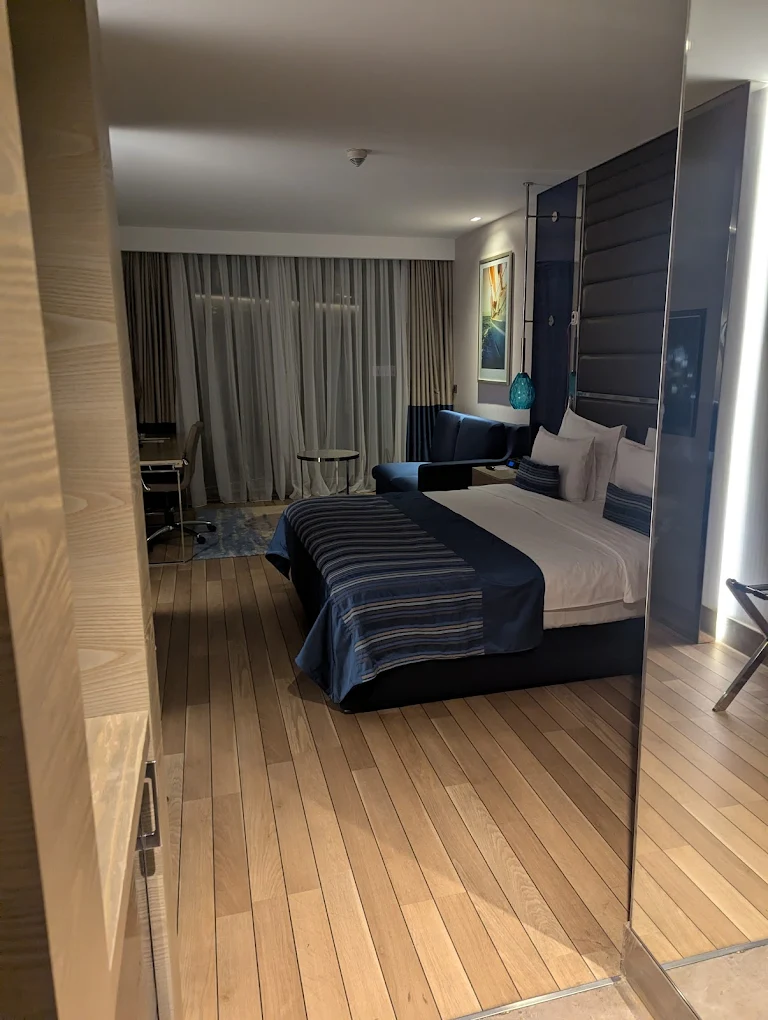
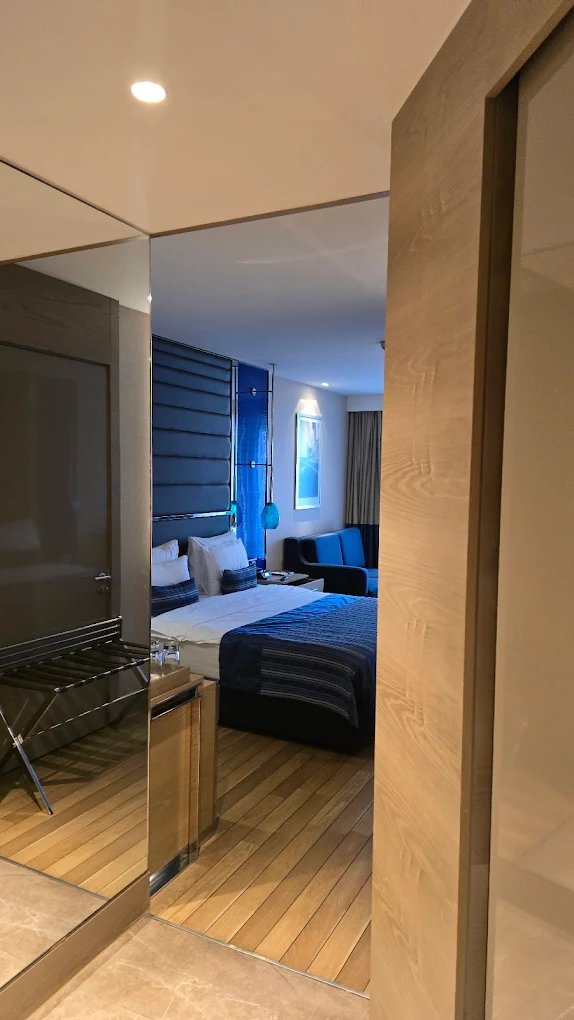


Butik Otel Mobilyaları
Etiket:Fire-Rated Hotel Furniture Turkey, Fireproof Doors Turkey, Fireproof Hotel Doors Turkey, Fireproof Hotel Furniture Turkey, Hotel Bed Base Turkey, Hotel Decoration Turkey, Hotel Desk Turkey, Hotel Furniture Companies Turkey, Hotel Furniture Prices Turkey, Hotel Headboard Turkey, Hotel Lobby Decoration Turkey, Hotel Luggage Rack Cabinets Turkey, Hotel Nightstand Models Turkey, Hotel Reception Desk Turkey, Hotel Wardrobes Turkey, Mini Bar Cabinet Turkey

Şunları da sevebilirsiniz
Pozantı Otel Mobilyaları | Adana Otel Mobilya Üretimi
Pozantı Otel Mobilyaları | Adana Otel Mobilya Üretimi