
Hotel Doors Turkey
Hotel Doors Turkey: The Definitive Guide to Commercial Fire-Rated Doors, Acoustic Engineering, and Hospitality Procurement
Within the architecture of a commercial lodging facility, the guestroom entry door is not a mere aesthetic partition. It is a highly engineered life-safety asset, an acoustic barrier, and a vital component of the property’s access control infrastructure. It must withstand tens of thousands of violent impacts, prevent the transmission of structural and airborne noise, provide a barrier against fire and toxic smoke, and seamlessly match the hotel’s luxury interior design narrative.
Sourcing Hotel Doors Turkey has emerged as a preferred strategy for global hoteliers seeking to meet strict international building codes without exceeding finite FF&E (Furniture, Fixtures, and Equipment) or millwork budgets. Turkish door manufacturers occupy a leading position in the global contract market by operating advanced industrial automated facilities certified to European (EN), British (BS), and American (UL) testing standards.
This definitive technical guide provides architects, project managers, and procurement specialists with the actionable insights required to successfully navigate the engineering specifications, testing certifications, regional manufacturing clusters, and logistics pipelines of the Turkish commercial door sector.
1. The Strategic Value Proposition of Sourcing Hotel Doors from Turkey
The hospitality sector requires high-volume production coupled with hyper-specific technical customization. Sourcing Hotel Doors Turkey delivers clear macroeconomic and industrial advantages that directly protect a project’s timeline and financial bottom line.
Macroeconomic Alignment and Customs Advantages
Turkey’s geographical position at the axis of Europe, Asia, and Africa provides a distinct logistics advantage over East Asian manufacturing alternatives. For major European projects, Turkish manufacturers can dispatch finished door assemblies via overland road freight, arriving directly at European construction sites within 5 to 10 days.
Furthermore, under the long-standing EU-Turkey Customs Union agreement, industrial goods manufactured in Turkey enter the European market entirely free of customs duties when accompanied by an A.TR movement certificate, significantly lowering total landed procurement costs.
Advanced Industrial Automation and Vertical Integration
The premium tier of the Turkish door manufacturing sector utilizes state-of-the-art European machinery parks. Production lines are equipped with automated multi-axis CNC routing systems, laser-guided edge-banding machinery, and precision hydraulic hot presses.
This advanced industrial automation ensures that critical components—such as structural lock mortises, hidden closer cavities, and drop-seal drops—are machined to tolerances within fractions of a millimeter. Because Turkey maintains a completely self-contained domestic supply chain for timber, engineered boards, architectural glass, performance sealants, and metal frame plating, manufacturers control every production phase without relying on unstable third-party component imports.
Comprehensive Design Customization (Bespoke vs. Catalog)
Unlike mass-market manufacturers that only supply standard catalog sizes, contract producers of Hotel Doors Turkey specialize in architectural custom fabrication. They treat the door as an extension of the hotel’s custom millwork.
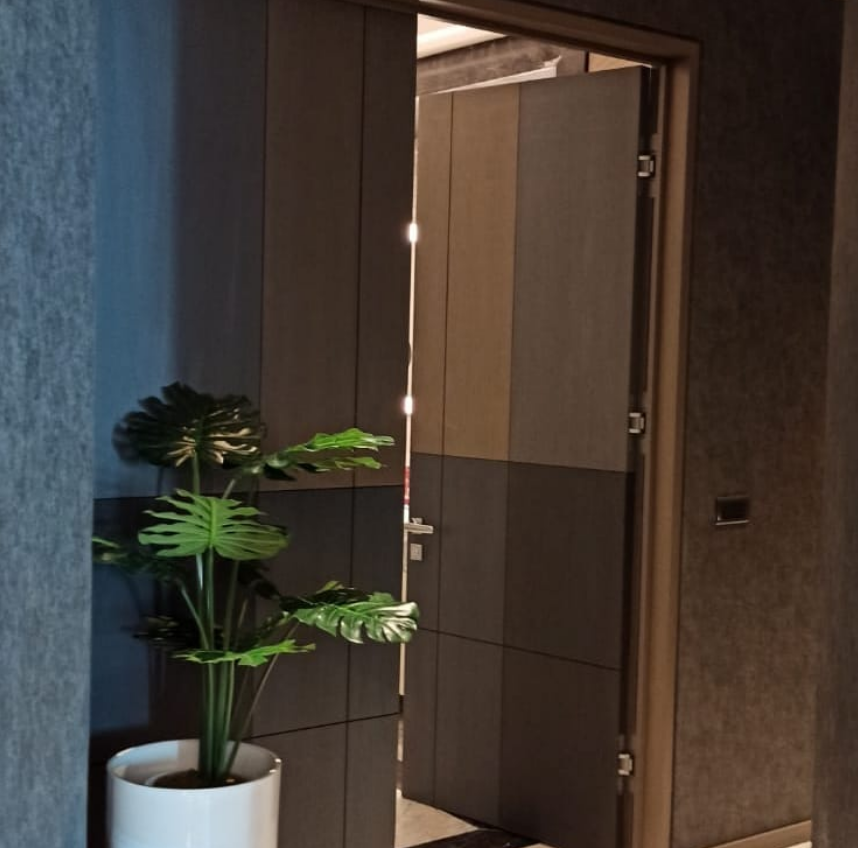
Whether an interior designer specifies floor-to-ceiling oversized doors, integrated flush-wall pivot systems, exotic book-matched wood veneers, or custom inlaid brass detailing, Turkish factories possess the engineering flexibility to adapt technical fire and acoustic cores to match any artistic intent.
2. Anatomical Engineering of a Contract Hospitality Door Assembly
A commercial hotel entry door must be engineered as a complete, integrated assembly—including the leaf, the frame, the sub-frame, the hinges, the seals, and the electronic locking system. If any single component is poorly specified, the entire assembly’s fire or acoustic rating will fail. Turkish contract manufacturers build Hotel Doors Turkey using precise multi-layered material cross-sections.
+--------------------------------------------------------------------------+

|             TECHNICAL CROSS-SECTION OF A COMBINED FIRE/ACOUSTIC DOOR     |
+--------------------------------------------------------------------------+

| [Aesthetic Face]  -> Natural Exotic Wood Veneer + High-Hardness UV Coat  |
| [Sub-Layer Face]  -> High-Density Fiberboard (HDF) or Marine Plywood    |
| [Core Technology] -> Solid Particleboard Core (Sauerland) / Mineral Board|
| [Edge Perimeter]  -> Solid Hardwood Livery + Concealed Intumescent Seals |
| [Base Hardware]   -> Automated Heavy-Duty Mechanical Drop-Down Acoustic Seal |
+--------------------------------------------------------------------------+
Core Technologies: Acoustic Insulation and Fire Resistance
The internal core determines the primary functional performance of the door leaf. Turkish manufacturers avoid the hollow-core or semi-solid honeycomb paper structures found in residential doors.
- Solid Tubular and Solid Particleboard Cores: Sourced from global engineering leaders like Germany’s Sauerland Spanplatte or developed through proprietary local timber composites. These high-density cores provide structural mass, preventing the leaf from warping under severe temperature differences between the air-conditioned guestroom and the corridor.
- Mineral and Ceramic Core Technologies: For high-temperature fire ratings (such as 60, 90, or 120 minutes), the door core incorporates specialized non-combustible mineral boards or calcium silicate layers that do not transmit thermal energy or burn under direct flame contact.
Frame and Sub-Frame Architecture
The door frame must support a heavy leaf (often weighing between 60kg and 100kg) across hundreds of thousands of cycles without sagging or pulling away from the drywall partition.
- Adjustable Solid Wood and MDF Frames: Engineered with telescopic architraves that can adjust to varying wall thicknesses on-site. Frames are built using cross-laminated solid wood or high-density water-resistant MDF to guarantee absolute structural tracking.
- Galvanized and Powder-Coated Steel Frames: For service zones, back-of-house corridors, high-traffic commercial spaces, or contemporary industrial hotel designs, Turkish factories engineer heavy-gauge galvanized steel frames. These frames are treated with architectural-grade powder coatings that resist impacts from housekeeping carts and luggage trolleys.
Edge-Banding and Lipping Construction
The perimeter edges of a guestroom door leaf are highly vulnerable to impact damage and moisture absorption during room cleaning.
- Concealed Hardwood Lippings: Turkish manufacturers apply solid hardwood lipping (typically European Beech, Oak, or Walnut) around all four edges of the door core before applying the final face panels. This ensures that the structural perimeter can be planed on-site if minor adjustments are needed, while completely concealing the core materials.
- Impact-Resistant ABS Edging: For budget-conscious select-service properties, edges are sealed with thick, high-impact ABS edge-banding utilizing specialized polyurethane (PUR) moisture-proof adhesives applied via laser-guided edge-banders.
3. Fire-Safety Engineering and International Building Code Compliance
When purchasing Hotel Doors Turkey, fire safety represents a strict legal liability metric. Commercial buildings must contain fire zones to ensure guests have adequate time to evacuate safely during an emergency. Turkish manufacturers build and test their door systems to satisfy the world’s most stringent fire certification paths.
+-------------------------------------------------------------------------+

|                 FIRE-SAFETY TESTING AND EN/BS/UL CODES                  |
+-------------------+--------------------+--------------------------------+

| TESTING STANDARD  | TARGET GEOGRAPHY   | PERFORMANCE CRITERIA           |
+-------------------+--------------------+--------------------------------+

| EN 1634-1         | European Union /   | Integrity (E) and Thermal      |
|                   | International      | Insulation (EI) under pressure |
+-------------------+--------------------+--------------------------------+

| BS 476-22         | United Kingdom /   | Stability and integrity of     |
|                   | Middle East        | fully loaded assemblies        |
+-------------------+--------------------+--------------------------------+

| UL 10C            | North America /    | Positive pressure testing      |
|                   | Global Brands      | including the severe Hose Stream|
+-------------------+--------------------+--------------------------------+
The Mechanism of Intumescent Fire Seals
A fire-rated door assembly relies on the deployment of chemical barriers to stop the spread of fire and toxic smoke.
- Thermal Expansion Technology: Turkish fire-rated doors incorporate specialized intumescent graphite strips recessed into the door frame or the perimeter of the door leaf.
- The Activation Phase: When ambient room temperatures reach approximately 150°C to 200°C, these intumescent strips rapidly expand to up to 25 times their original volume. This expansion seals all gaps between the leaf and the frame, creating an airtight barrier that chokes off the oxygen supply and traps deadly carbon monoxide gas within the room of origin.
EN 1634-1: The European Standard for Fire and Smoke Control
The European standard evaluates doors under two core parameters: Integrity (E), which measures the door’s ability to resist the physical passage of flames and hot gases, and Insulation (I), which measures how well the door prevents thermal energy from heating the unexposed side of the door leaf.
- EI30 Classification: The door assembly must successfully block flames and keep temperatures on the corridor side below hazardous levels for a minimum of 30 minutes. This is the universal baseline requirement for standard guestroom entry doors.
- EI60 and EI90 Classifications: Utilized for high-risk zones, storage rooms, elevator lobbies, and primary emergency stairwells. Turkish manufacturers reinforce these assemblies with specialized multi-layered core composites and dual-row intumescent seals to meet these longer fire resistance thresholds.
UL 10C: Positive Pressure Fire Testing for Global Brands
International hotel operators (such as Marriott, Hilton, and Hyatt) frequently mandate American UL 10C positive pressure fire compliance for their properties worldwide.
- The Hose Stream Test Requirement: Unlike European testing protocols, the UL standard requires the door assembly to survive a severe Hose Stream Test immediately after enduring direct furnace flames.
- The Mechanical Impact Resistance: An industrial fire hose delivers high-pressure water impact directly against the scorched door leaf. Turkish factories certified for UL 10C use specialized internal mineral boards and reinforced mechanical anchoring points to ensure the structural assembly does not collapse under this intense thermal and physical shock.
4. Acoustic Engineering and Sound Isolation Standards (dB Ratings)
Acoustic privacy is a major driver of guest satisfaction and online review scores. The guestroom entry door is the single weakest acoustic point in the wall assembly separating the quiet sleeping area from loud public corridor traffic. Sourcing Hotel Doors Turkey allows developers to procure highly optimized acoustic assemblies engineered to eliminate noise complaints.
The Physics of Sound Transmission Class (STC / Rw)
Sound travels through air gaps and physical vibrations. To block noise effectively, a door assembly requires a combination of structural mass, dampening layers, and complete perimeter sealing.
- Airborne Noise Control: Standard residential doors offer an acoustic rating of less than 20 dB, which allows clear speech to pass through easily.
- Contract Hospitality Baselines: Universal brand standards require guestroom entry doors to deliver a minimum acoustic rating of 32 dB to 35 dB. Luxury 5-star properties frequently demand high-performance acoustic isolation targets ranging from 40 dB to 44+ dB.
Perimeter Sealing and Drop-Down Acoustic Seals
An acoustic door will fail to meet its performance rating if even a tiny air gap remains open around its perimeter. A 1mm gap along the bottom of a door can reduce its overall acoustic performance by up to 10 dB.
- Dual-Acoustic EPDM Gaskets: Turkish manufacturers route specialized, high-elasticity EPDM rubber gaskets into the door frame stops. These gaskets compress completely when the door closes, sealing out noise without making the door difficult to pull open or push shut.
- Automatic Mechanical Drop Seals: The base of a hotel door cannot use a permanent threshold sweep without blocking wheelchair access or damaging premium carpets. Turkish factories integrate heavy-duty automatic mechanical drop seals into a concealed channel at the bottom of the door leaf.
- When the door leaf closes fully, a mechanical actuator pin presses against the frame, instantly dropping a dense neoprene or silicone internal seal down onto the floor surface. When the door opens by just a few millimeters, the internal seal automatically retracts upward into the leaf, preventing carpet friction and ensuring smooth operation.
5. Architectural Finishes, Materials, and Aesthetic Configurations
While safety and acoustic engineering define the door’s technical framework, its surface finish establishes the visual character of the property’s hallways and interiors. Producers of Hotel Doors Turkey offer an extensive selection of architectural surfaces engineered to withstand commercial cleaning regimes and high-volume guest use.
+--------------------------------------------------------------------------+

|                  ARCHITECTURAL FINISH COMPARISON MATRIX                  |
+-------------------+--------------------+---------------------------------+

| FINISH TYPE       | OPERATIONAL ADVANTAGE| IDEAL HOSPITALITY APPLICATION   |
+-------------------+--------------------+---------------------------------+

| Natural Wood      | Luxury aesthetic,  | 5-Star Luxury Resorts, High-End |
| Veneer (Poly/UV)  | book-matched grain | Boutique Properties, Suites     |
+-------------------+--------------------+---------------------------------+

| High-Pressure     | Maximum impact and | Select-Service Hotels, Extended |
| Laminate (HPL)    | scratch resistance | Stay, High-Traffic Corridors    |
+-------------------+--------------------+---------------------------------+

| Engineered        | Absolute color and | Large Scale Multi-Property      |
| CPL Veneers       | grain uniformity   | Commercial Brands               |
+-------------------+--------------------+---------------------------------+

| Polyurethane      | Seamless, uniform  | Contemporary Minimalist Motifs, |
| Lacquer Paint     | architectural color| Tech-Forward Urban Properties   |
+-------------------+--------------------+---------------------------------+
Premium Natural Wood Veneers
For luxury and upscale properties, natural wood veneer remains the premium standard for high-end entry spaces.
- Artisan Grain Matching: Turkish factories excel at advanced veneer matching, including book-matching, slip-matching, and radial matching layouts. Veneers are sliced from premium regional and international hardwoods, including European Oak, American Walnut, Ash, and Eucalyptus.
- UV-Stabilized Protective Seals: To prevent the wood from fading or changing color due to corridor lighting or direct sunlight from guestroom windows, veneers are sealed with multi-layered, ultra-violet (UV) cured polyurethane clear coats. These coatings create a tough surface layer that resists scratches from luggage and keys.
High-Pressure Laminates (HPL) and Continuous Pressure Laminates (CPL)
For properties focused on long-term structural durability and simplified maintenance, laminates offer an exceptionally tough surface finish.
- Impact and Abrasion Resistance: Sourced from leading international innovators, HPL and CPL finishes provide non-porous, high-density exterior layers that are highly resistant to impacts, deep scratches, and moisture intrusion.
- Aesthetic Realism: Modern HPL options feature hyper-realistic wood grain textures, registered embossed surfaces, or bold architectural matte colors. These options provide complete color uniformity across hundreds of door openings, eliminating the natural variations found in raw wood veneers.
Polyurethane Lacquered Painted Finishes
Contemporary, minimalist, and lifestyle urban hotels often specify completely smooth, colored door surfaces.
- Industrial Spray Application: Turkish door plants operate automated, dust-free spray booth lines that apply multiple layers of high-grade polyurethane paints.
- Chemical Cleanability: Finished doors are checked to ensure compliance with standard EN 12720 for surface liquid chemical resistance. This step ensures that housekeeping teams can repeatedly apply strong commercial sanitizers without damaging the paint gloss level or causing surface cracking.
6. Integrating Access Control and Hospitality Hardware
A commercial hotel door must be pre-engineered to house advanced electronic locking systems, heavy-duty door closers, and life-safety hardware. Attempting to modify or cut mortises into a fire-rated door on-site can invalidate its certification. Turkish manufacturers coordinate closely with international hardware brands to ensure completely seamless integration.
Precision Electronic Lock Mortising
Modern hospitality facilities utilize wireless electronic RFID, BLE (Bluetooth Low Energy), or pin-code locking systems from global access control leaders (such as Assa Abloy, VingCard, Dormakaba, or Salto).
- Factory CNC Preparation: During the engineering phase, the client specifies the exact model of electronic lock. The Turkish factory uses its automated CNC routing lines to machine the internal lock cases, faceplate recesses, wiring channels, and battery pack compartments directly into the door leaf core before applying surface finishes. This precision engineering prevents alignment errors during site installation.
Concealed vs. Surface-Mounted Door Closers
Building safety regulations require all fire-rated entry doors to be equipped with self-closing mechanisms to ensure the door closes and latches shut automatically after every use.
- Concealed Overhead Closers: For high-end design projects, designers prefer to hide unsightly mechanical hardware. Turkish producers have developed internal framing systems capable of housing concealed overhead door closers (such as Dormakaba ITS96 or Geze Boxer) directly within the top rail of the door leaf. This preserves a clean architectural profile while fully satisfying all fire closing force codes.
- Surface-Mounted Solutions: For economy or select-service installations, reinforced internal wooden blocking blocks are engineered into the upper core structure of the door leaf, providing solid anchoring zones for heavy-duty surface-mounted scissor-arm or slide-channel door closers.
Security Viewers and Heavy-Duty Hinges
Small hardware components require identical structural engineering focus to avoid breakdown under continuous commercial use.
- Three-Dimensional Adjustable Hinges: High-density acoustic and fire doors can weigh up to 100kg, which places immense constant strain on the frame. Turkish manufacturers specify premium 3D adjustable hidden hinges (such as Simonswerk Tectus or local heavy contract equivalents). These allow installation crews to fine-tune the door leaf alignment across three independent axes, ensuring perfect perimeter gap seals.
- Fire-Rated Optical Viewers: Wide-angle digital or optical security peepholes are pre-installed into fire-insulated sleeves inside the door core, providing guests with clear visibility while maintaining the door assembly’s integrity against heat transmission.
7. Regional Manufacturing Hubs for Hotel Doors in Turkey
The commercial door manufacturing sector in Turkey is structured into specialized industrial clusters. Each region features distinct production scales, automated machinery capabilities, and target market segments.
Kayseri: Industrial Production Lines and Large-Scale Output
Located in Central Anatolia, Kayseri houses some of the most expansive and technologically automated door manufacturing plants in EMEA.
- Technical Focus: Massive volume capabilities, highly standardized assembly lines, and exceptional efficiency for large projects.
- Best Suited For: Massive business hotels, mega-resorts, large residential complexes, and economy lodging operations requiring thousands of uniform fire-rated doors. Kayseri factories excel at delivering fast production turnarounds and highly optimized unit pricing on large volume contract orders.
İnegöl and Bursa: Precision Customization and Mid-to-Upscale Focus
The İnegöl region is an international hub for furniture and millwork engineering, exporting high-precision architectural elements to over 150 countries.
- Technical Focus: High-speed CNC customization, laser-guided edge-banding, and contemporary architectural laminates.
- Best Suited For: Midscale, upscale, and full-service brand properties (such as Hilton Garden Inn, Courtyard by Marriott, or Novotel). İnegöl manufacturers offer an ideal balance, allowing clients to combine custom veneer detailing with highly automated fire and acoustic core production lines.
Istanbul: Bespoke Craftsmanship and Luxury Multi-Material Integration
Istanbul’s key manufacturing zones (Hadımköy, Dudullu, and Tuzla) serve as the design engineering and luxury production core for premium architectural door lines.
- Technical Focus: Highly complex bespoke engineering, advanced multi-material layering, and specialized test laboratories.
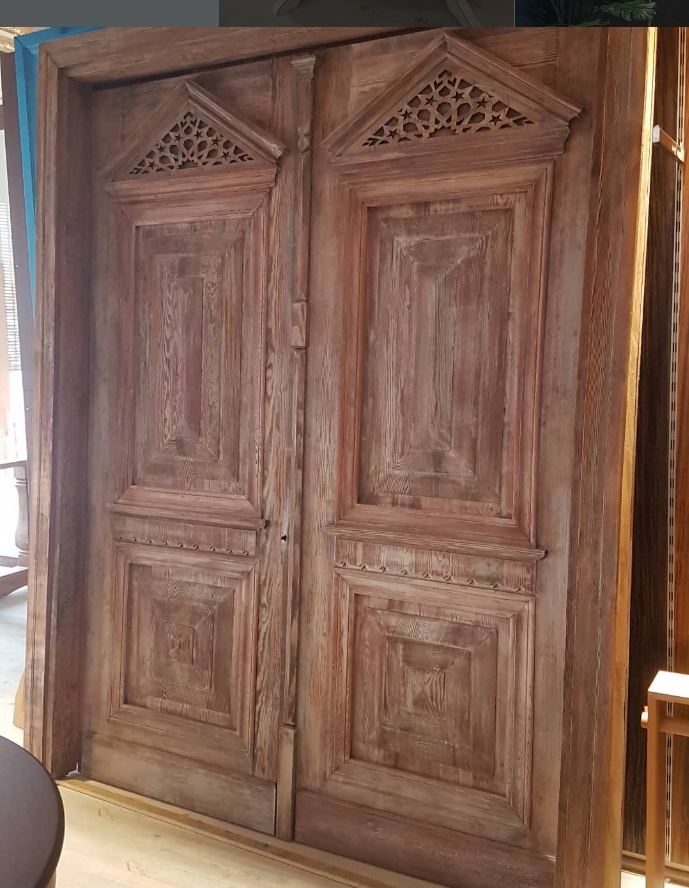
- Best Suited For: 5-star ultra-luxury boutique hotels, historic palace restorations, flagship properties, and projects requiring complex custom engineering like oversized flush-to-wall pivot doors. Istanbul manufacturers work closely with top-tier architectural firms to turn complex concept sketches into fully certified, functioning real-world installations.
8. Step-by-Step Technical Procurement Framework
Procuring thousands of highly technical door assemblies from an international manufacturer requires a structured management pipeline to eliminate errors and prevent construction delays.
+--------------------------------------------------------------------------+

|                   THE HOTEL DOOR PROCUREMENT TIMELINE                    |
+--------------------------------------------------------------------------+

| PHASE 1: ARCHITECTURAL REVIEW & DOOR SCHEDULE AUDIT                      |
| - Verify every opening's fire, acoustic, and dimensional data points.    |
+--------------------------------------------------------------------------+

| PHASE 2: SHOP DRAWINGS & HARDWARE MATRIX INTERLOCK                       |
| - Map out exact CNC routing templates for chosen electronic locks.       |
+--------------------------------------------------------------------------+

| PHASE 3: PROTOTYPE TESTING & SAMPLE SIGN-OFF                             |
| - Fabricate physical leaf and frame corner mock-ups for review.          |
+--------------------------------------------------------------------------+

| PHASE 4: MASS MANUFACTURING & IN-LINE MOISTURE CHECKS                    |
| - Mill components while monitoring internal timber moisture (6% to 10%).  |
+--------------------------------------------------------------------------+

| PHASE 5: PALLETIZATION & WEATHERPROOF WOODEN CRATING                     |
| - Secure doors flat on reinforced pallets wrapped in airtight membranes. |
+--------------------------------------------------------------------------+

| PHASE 6: FREIGHT EXECUTION & CUSTOMS CLEARANCE                           |
| - Issue duty-free A.TR certificates for fast port processing.            |
+--------------------------------------------------------------------------+
Phase 1: Architectural Review and Door Schedule Auditing
The procurement process begins with a detailed audit of the project’s architectural Master Door Schedule.
- Turkish factory engineers analyze every single opening to verify its specific opening direction (Left Hand vs. Right Hand), exact structural wall opening dimensions, required fire resistance rating (30/60/90 mins), acoustic target (dB level), and aesthetic surface finish.
- Any discrepancies between the interior design concepts and local life-safety building codes are flagged for immediate adjustment.
Phase 2: Shop Drawing Generation and Hardware Matrix Interlocking
Before raw materials enter production, the factory generates comprehensive 1:1 scale structural shop drawings for every unique door type.
- The factory’s engineering department requests physical samples or official internal technical templates from the chosen electronic lock and hardware suppliers.
- These exact templates are digitally overlaid onto the door shop drawings to map out the precise CNC cutting patterns for all hinges, locks, closers, and drop-seal channels.
- Mass production cannot begin until these combined drawings receive a formal signature of approval from the client’s lead architect.
Phase 3: The Factory Prototype and Mock-Up Sign-Off Protocol
For mid-to-large-scale hospitality projects, validating a physical sample is an essential quality control step.
- The Turkish factory fabricates a full-scale physical door assembly prototype—including the exact frame, architraves, leaf core, hardware cutouts, and specified surface veneer.
- The development team or project consultant visits the Turkish plant to physically test the prototype’s closing force, examine the veneer stain quality under varying light conditions, and double-check all perimeter gasket clearances.
- Once approved, this physical sample serves as the binding quality baseline for the entire mass manufacturing run.
Phase 4: Mass Production and Material In-Line QA Tracking
Once scheduled for mass production, materials move through the automated assembly line with rigorous quality tracking at every stage.
- Digital Moisture Verifications: Wood inputs are continually verified using digital pin meters to ensure internal moisture levels are held strictly between 6% and 10%. Keeping moisture within this window prevents the wood from warping, splitting, or shrinking when shipped across different climate zones.
- CNC Precision Routing: Multi-axis CNC machinery cuts the mortises for locks and hinges within a tight 0.5mm tolerance range, ensuring completely trouble-free hardware installation at the construction site.
- Independent Field Quality Audits: Buyers frequently retain independent testing agencies (such as SGS or Bureau Veritas) to conduct during-production inspections (DPI) and final random inspections (FRI) at the factory before any cargo moves into the packaging department.
Phase 5: Technical Packaging and Logistics Engineering
Doors are heavy, high-surface-area items that require robust packaging to prevent scratching or impact damage during international transport.
- Flat Palletized Stacking: Finished door leaves are cleaned, wrapped in high-density polyethylene (HDPE) foam membranes, protected with thick cardboard corner guards, and stacked completely flat on heavy-duty, reinforced wooden pallets. Stacking doors vertically can cause the leaves to bow or warp over long transit timelines.
- Airtight Weatherproof Wrapping: Filled pallets are wrapped in multiple layers of heavy industrial shrink film and banded with high-tensile steel or plastic straps to prevent any internal movement.
- All wood packaging materials comply fully with international ISPM-15 phytosanitary crating regulations, ensuring smooth transit through global border checkpoints.
9. Logistics Corridor Strategy and International Trade Documentation
Successfully shipping Hotel Doors Turkey to global job sites requires a clear understanding of international transport routes and trade certificates to avoid customs delays and remove unnecessary import duties.
Multi-Modal Logistics Corridors
Turkey’s highly developed transportation infrastructure provides flexible shipping routes tailored to different regional project timelines.
- Overland Road Trailer Networks: Using high-volume mega-trailers, Turkish logistics providers deliver door assemblies directly to European job sites within 5 to 10 days, bypassing the long shipping loops required by Asian ports and supporting tight construction schedules.
- Maritime Sea Container Lines: For projects in the Americas, Africa, or coastal GCC regions, factories utilize major Turkish shipping ports, including Ambarlı (Istanbul), Alsancak (Izmir), and Gemlik (Bursa), offering direct connections to major global ports.
Essential Customs Documentation Checklist
To ensure fast customs clearance and take advantage of preferential tariff frameworks, the Turkish manufacturer provides a complete technical documentation package:
- The A.TR Movement Certificate: This certificate is vital for hotel projects within the European Union. It certifies that the industrial goods were produced or cleared into free circulation within Turkey, allowing them to enter the EU entirely duty-free under the EU-Turkey Customs Union agreement.
- The Certificate of Origin (CoO): Legalized by regional Chambers of Commerce to verify Turkish manufacturing origin, which is crucial for satisfying preferential tariff frameworks in North America and GCC nations.
- Third-Party Test Certificates & Fire Labels: Every certified fire door is equipped with a permanent, tamper-proof metal or plastic tracking label riveted into the hinge-side edge of the leaf. This label details the factory’s certification numbers, the fire rating duration, and the independent testing body’s identification codes, giving local building inspectors immediate proof of compliance.
10. Strategic Risk Mitigation: Avoiding Common Door Procurement Pitfalls
Navigating large-scale international door procurement requires a clear understanding of potential pitfalls. Implementing these risk-mitigation strategies protects your budget and project timeline.
Pitfall 1: Failing to Sync Drywall Openings with Finished Door Dimensions
- The Risk: Structural wall openings are constructed on-site before the final door frame shop drawings are completed, resulting in door assemblies that are either too large to fit or too small to be securely anchored into the structural partitions.
- The Prevention: Mandate complete coordination between the on-site general contractor and the Turkish factory’s engineering team during the shop drawing phase. Establish fixed structural opening targets on-site, and configure the telescopic door frames to handle minor real-world wall thickness variances (+/- 15mm) effortlessly.
Pitfall 2: Ordering Hardware Independently Without Factory Alignment
- The Risk: Electronic lock cases or concealed overhead door closers arrive on-site only to find they cannot be installed because the internal factory-routed cavities are the wrong size or depth.
- The Prevention: Never allow independent hardware sourcing without providing physical samples or official digital templates directly to the door manufacturer’s CNC engineering team. The factory must pre-test and verify the hardware fit on a physical mock-up corner assembly before launching mass production.
Pitfall 3: Overlooking Flooring Thickness in Drop-Seal Engineering
- The Risk: Automatic mechanical drop seals are calibrated at the factory, but when installed on-site, they either fail to touch the floor or drag heavily across thick, high-pile luxury carpets, burning out the closing mechanisms.
- The Prevention: Disclose the exact specified thickness of the finished flooring materials (e.g., thin luxury vinyl tile vs. thick underlayment carpet pads) to the factory’s engineering team. The automatic drop-down mechanical seals can then be adjusted to deploy perfectly for the project’s specific floor clearance needs.
11. Conclusion: Achieving Security, Safety, and Style with Turkish Manufacturers
Sourcing Hotel Doors Turkey offers international hospitality developers, architects, and contractors an exceptionally reliable, high-performance pathway to execute complex building fit-outs. By blending advanced European factory automation and strict international fire and acoustic testing compliance with a rich heritage of custom architectural woodworking, Turkey’s contract door sector delivers a dependable foundation for long-term project success.
By selecting the ideal regional manufacturing hub, establishing comprehensive technical specifications across all core and face substrates, and following a disciplined procurement framework—from detailed shop drawings through prototype physical sign-offs to secure flat palletized shipping—project managers can confidently deliver guest entry zones that elevate brand value, ensure guest safety, and provide quiet, comfortable interiors for years to come.
To help optimize this technical door analysis for your upcoming hospitality development, please share:
Butik Otel Mobilyaları
Butik Otel Mobilyaları
Butik Otel Mobilyaları
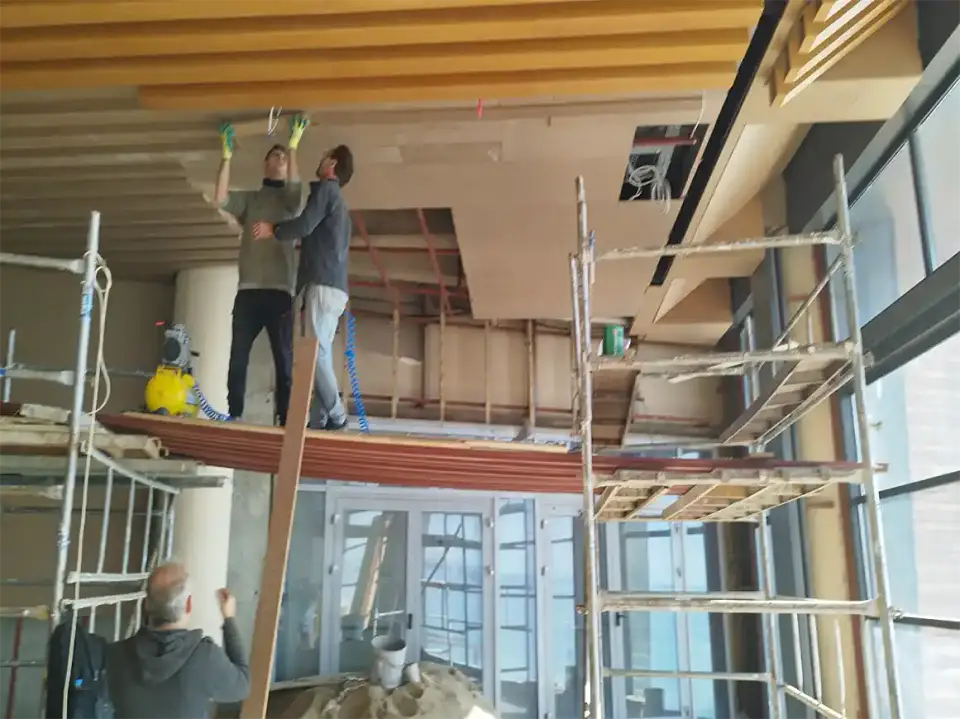
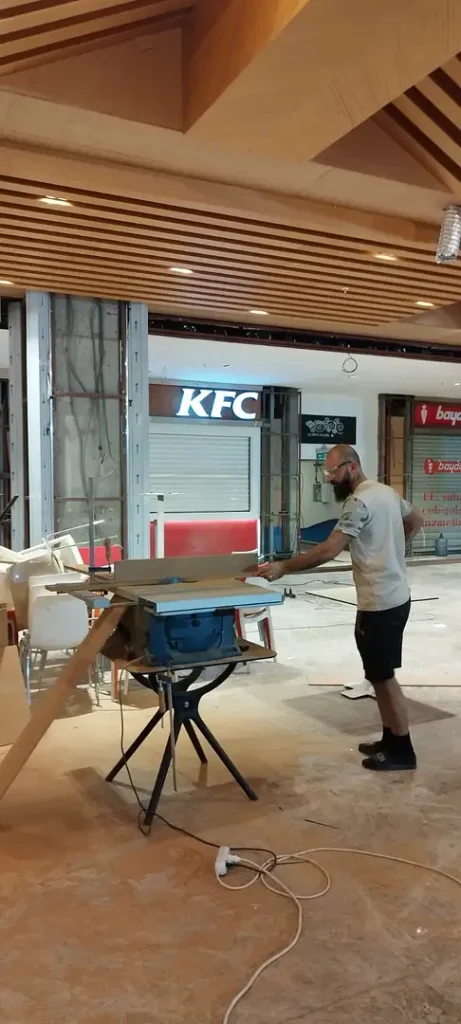
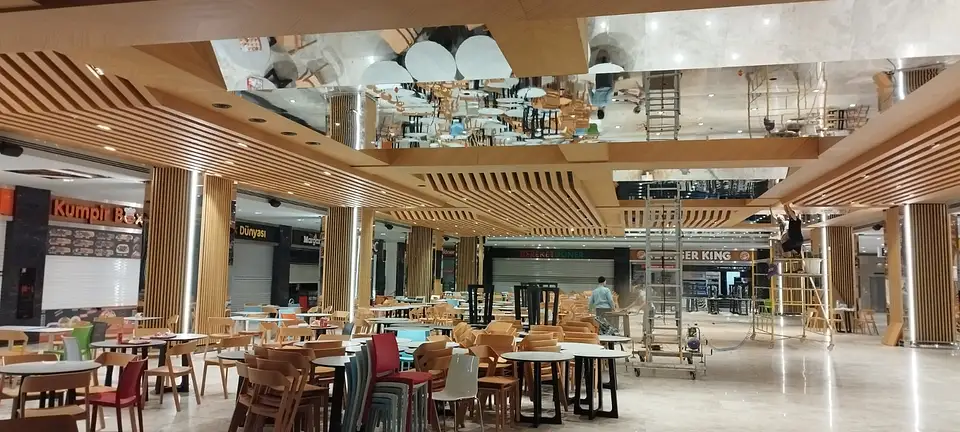
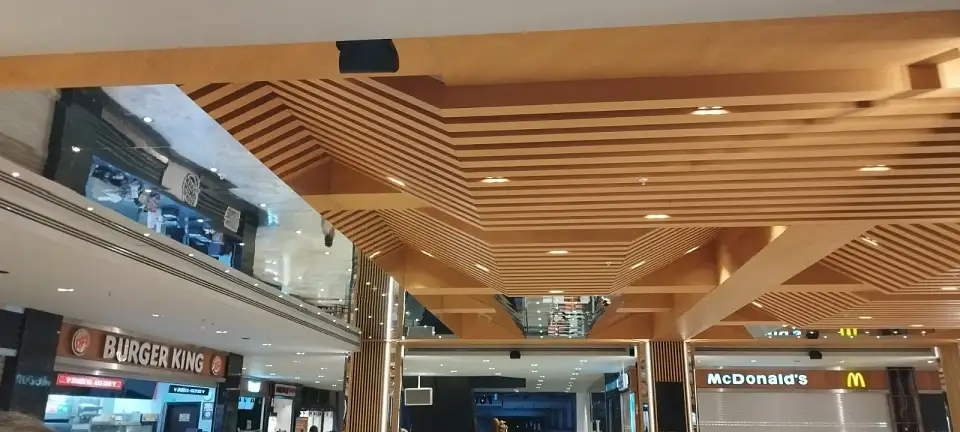

Tarihi Binaların Ahşap Dekorasyonları
Tarihi Ahşap restorasyonlari Kapılar
Tarihi binaların mobilya dekorasyonları


Butik Otel Mobilyaları

Şunları da sevebilirsiniz
Pozantı Otel Mobilyaları | Adana Otel Mobilya Üretimi
Pozantı Otel Mobilyaları | Adana Otel Mobilya Üretimi